A Practical Guide for Women Performing Congregational Prayers at the Holy Mosques
As the majority of women from South Asia offer their prayers at home, which remains their preferred and more meritorious practice, the journey to the Haramain Sharifain (the Holy Mosques in Makkah and Madinah) presents a unique opportunity. When present at Masjid al-Haram or Masjid al-Nabawi, women need to understand the correct method of joining the congregational (ba-jama’at) prayer.
The following guide outlines the procedure for women to offer prayer behind an Imam, specifically in accordance with the Hanafi school of jurisprudence.
Procedure for a Four-Rakaat Prayer behind an Imam
1. Intention (Niyyah)
A female follower must make a niyya (intention) in her heart for the particular Fard prayer (e.g., Fajr, Zuhr, Asr) she is following the Imam in, for the sake of Allah Subhanu Wa’ Tala. Although verbal expression isn’t obligatory, it is acceptable to confirm what’s in your heart.
2. Takbir Tahrimah
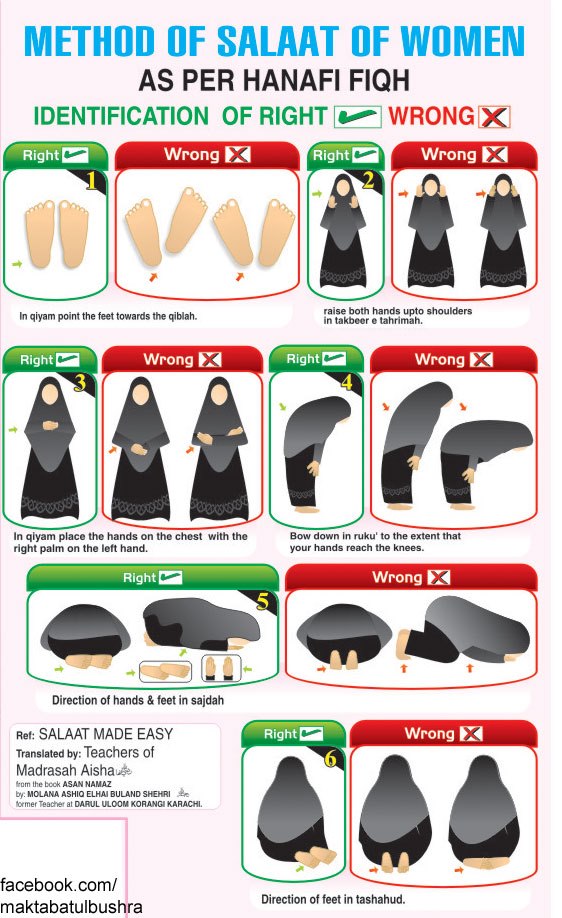
After the Imam has said the opening Takbir, the follower should turn towards the Qibla and raise her hands to the shoulders, keeping them placed on the veil or dupatta as it is. While saying “Allahu Akbar,” place the left hand on the chest and the right palm over the back of the left hand.
3. Hand Placement
Unlike men, women are advised to rest their hands on their chest, not below the navel, with the right hand on the left.
4. The Standing Position (Qiyam and Silence)
- Sana: Recite the opening glorification (Subhanaka Allahumma…) quietly.
- Listening: During the Imam’s recitation of prayers (Fajr, Maghrib, Isha), followers must keep silent once the Imam starts reciting. During silent prayers (Zuhr, Asr), the followers shouldn’t recite Surah Al Fatiha or any other additional verses, as the Imam’s recitation covers the followers.
5. Ruku (Bowing)
Women should slightly bow at congregational prayers to the extent that their hands could reach their knees without bending as much as men. The fingers should be kept together and placed on the knees without gripping them. Elbows should remain tucked close to the sides to maintain a modest, contracted posture.
6. Qawmah (Standing after Ruku)
As the Imam rises, saying “Sami’ Allahu liman hamidah,” the follower rises and silently says “Rabbana lakal hamd.”
7. Sujud (Prostration)
The prostration for women is characterized by maximum concealment and contraction:
- The body should be kept close to the ground, with the arms pressed against the sides and the thighs against the stomach.
- The forearms should be spread flat on the floor.
- The feet should be shifted out to the right side, with the worshipper sitting on the left buttock.
8. The Sitting Position (Qa’dah)
When sitting for Tashahhud, women should adopt the Tawarruk position—shifting both feet to the right and resting the body on the ground. Hands should be placed on the thighs with fingers kept together, facing the Qibla.
9. Completion and Salutations
The follower completes the final Tashahhud, Durood Ibrahim, and Dua silently. Once the Imam concludes the prayer by turning his head for Salam to the right and left, the follower follows suit.
Crucial Safety and Etiquette Warning
Women should not stand in the same row as men during congregational prayer at Haramain. Their standing directly in front of or beside them can invalidate the prayer of men as per the jurisprudential (fiqhi) decrees.