Saudi Arabia Tests Driverless Robobus Inside Madinah’s Quba Mosque
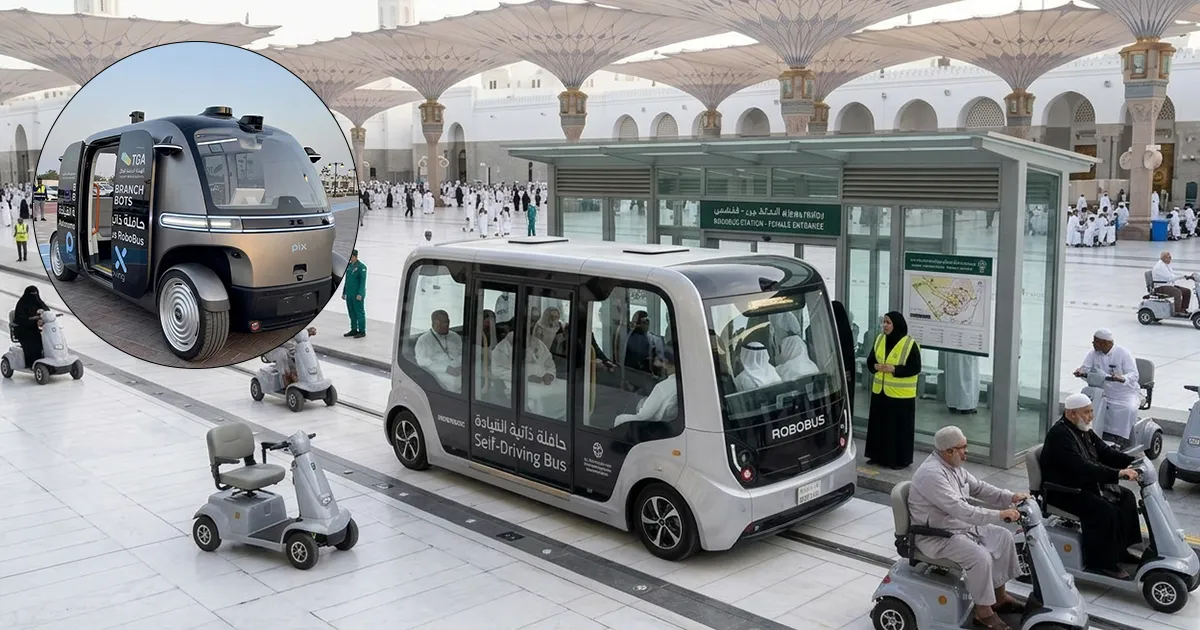
A 60-day trial of the electric RoboBus covers a 700-metre route through the mosque’s inner courtyard with no driver in sight.
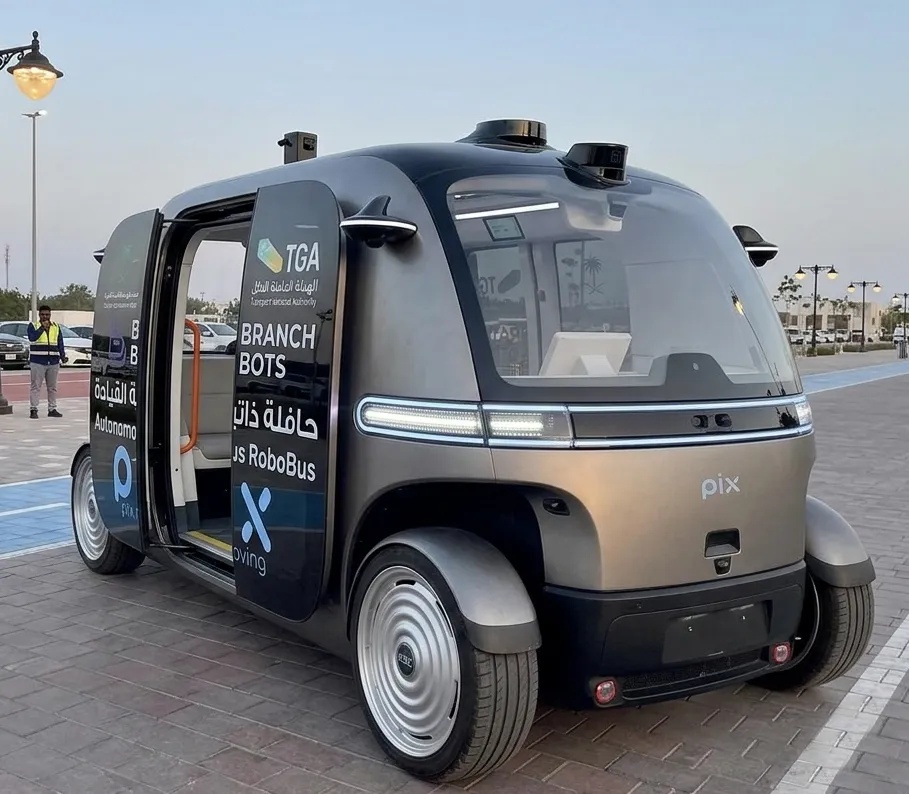
Saudi Arabia has started testing a self-driving shuttle bus inside the inner courtyard of Quba Mosque in Madinah, in what officials describe as one of the first deployments of autonomous vehicle technology at a religious site in the kingdom.
The trial, which began on 10 May 2026, is being run by the Transport General Authority (TGA) in partnership with the Madinah Region Development Authority. It will last 60 days. The vehicle in question, known as the RoboBus, carries up to 20 passengers and operates on a fixed 700-metre route without a human driver.
The route loops through the mosque’s inner courtyard, connecting the separate entrances for male and female visitors. It follows the same path previously used by golf carts, and the bus is designed to stay strictly within those limits during the trial.
The RoboBus is classified as an L4 autonomous vehicle, meaning it handles all driving tasks on its own within a defined area. It does not need a driver to monitor the road or be ready to take over, unlike L3 systems, which still require a human in reserve. At the other end of the scale, a fully autonomous L5 vehicle could theoretically drive anywhere under any conditions, but that technology does not yet exist commercially.
To navigate safely, the bus uses a combination of LiDAR for three dimensional mapping, cameras for visual recognition, and additional sensors that build a 360-degree picture of its surroundings up to 100 to 200 metres ahead. The system runs at low speeds, under 20 km/h, and can brake automatically if it detects a pedestrian or unexpected obstacle. A remote operator monitors each trip and can intervene if needed.
The authorities say the 60 day window is about gathering real-world data measuring how well the technology handles crowds, integrates with the existing infrastructure, and performs against high-resolution digital maps of the courtyard. If the trial goes well, the plan is to expand autonomous transport to other parts of Madinah and potentially across Saudi cities.
Saudi officials have also tied the project to broader national goals. The TGA said the RoboBus supports Vision 2030’s push toward digital transformation and smart city development. The government declared 2026 the Year of Artificial Intelligence, and the Quba Mosque trial is being positioned within that context as a visible, public test of what autonomous transport might look like at scale.
For pilgrims and visitors to Madinah, the practical impact for now is modest: a short electric shuttle ride across a courtyard. But the technology being tested there and the data being collected are intended to lay the groundwork for something larger.