Camel Bones, Palm Fronds, Leather: How the Quran Was First Written
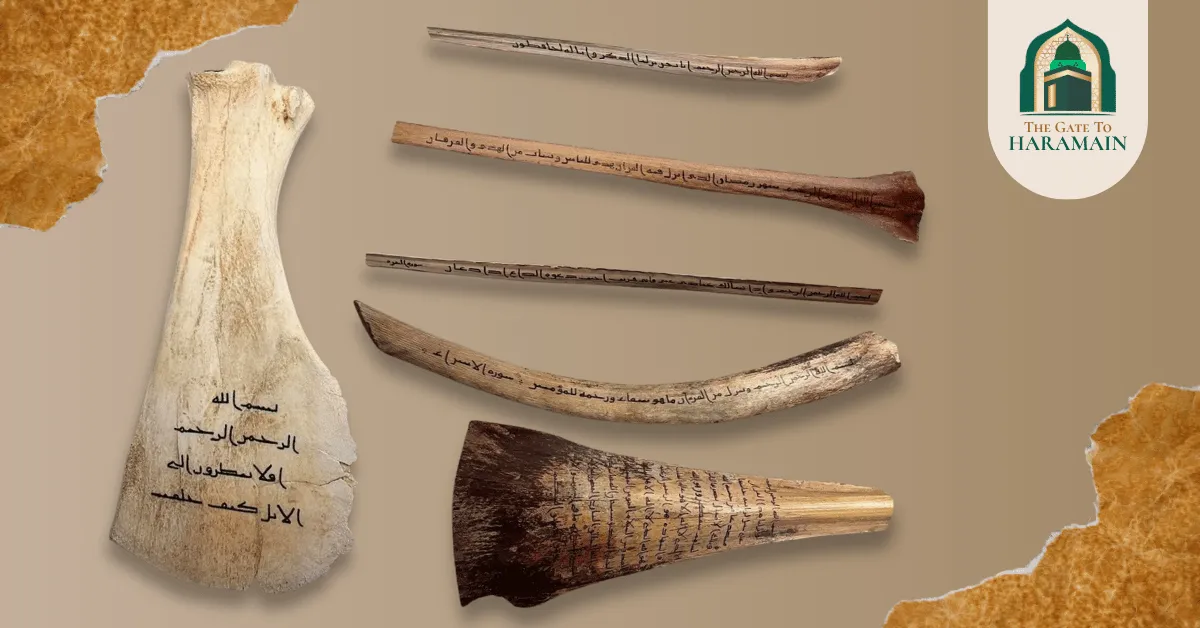
MAKKAH: Long before the Quran Pak existed as a single bound book, its verses lived on whatever surface a scribe had on hand: leather, palm fronds, flat stones, even the shoulder blades of camels.
The Holy Quran Museum in the Hira Cultural District of Makkah has recreated those surfaces for visitors. Replica parchments, wood tablets, stones, and bones sit alongside interactive displays showing how each one was used by the companions of the Prophet Muhammad ﷺ to record revelation as it came down.
None of it was neat. The Quran was not dictated onto pages; it was scratched, carved, and written across dozens of scattered objects before anyone gathered it into the single mushaf Muslims read today. The museum’s exhibits make that process visible: what the Sahabah actually held in their hands while they worked.
The museum is one of the main draws in the Hira Cultural District, which covers the Quran’s history, its sciences, and the stages of its compilation across a set of exhibition halls.