
Saudi Arabia Puts Umrah Meals Under Digital Watch

New Nusuk Rule Forces Travel Agencies to Register Every Catering Contract Before Pilgrims Can Book
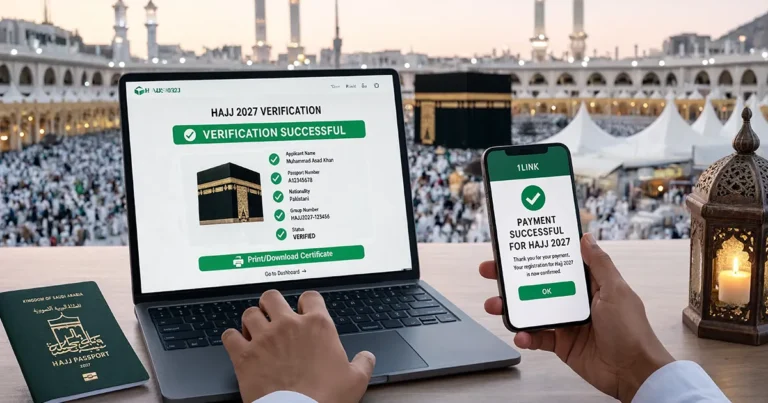
MAKKAH — For years, what pilgrims ate during Umrah was mostly a private matter between an agency and whoever it hired to cook. Not anymore. Saudi Arabia’s Ministry of Hajj and Umrah has pulled catering contracts into the Nusuk Masar platform. No package gets finalized now unless the meal provider is licensed, checked, and logged in the system first.
Quick answer: What is the Nusuk Masar catering rule
Saudi Arabia’s new catering rule requires every Umrah travel agency to register its food service contract, known in the industry as a Food BRN, on the Nusuk Masar platform before a pilgrim package can be booked. This change directly affects agency operations and travel plans, as the Ministry of Hajj and Umrah verifies each contract in real time against municipal licensing records, making timely registration essential for compliance and smooth processing.
Why does this rule exist
For a long time, catering contracts were not part of the infrastructure regulating flights, accommodations, and visa processing; therefore, there was no control over them. Officials describe the change as an effort to close that gap and remove unlicensed operators from the market.
How the verification works
Nusuk Masar now runs every catering contract against records held by the local municipal authorities, the amanat, in real time. No clean license, no health check, no caterer on the package. Simple as that.
Menus are part of the deal too. Operators have to publish what they’re actually serving, on the platform, before a pilgrim books. That’s a real shift from just taking an agency’s word for it.
More than 10,000 Saudi restaurants are reportedly being connected to the Nusuk app to make this work. Each pilgrim is expected to get an individual BRN code for meals, and that code has to be linked to their visa before it’s even issued. Meal vouchers, in other words, become part of the visa itself, not a separate arrangement an agency sorts out later.
It’s not a new idea, either. Saudi Arabia already made transport mandatory and bundled into the Umrah visa. Meals now appear to be getting the same treatment.
Which countries are affected first
Phase one applies to four of the largest source markets for pilgrims:
- Pakistan
- India
- Bangladesh
- Egypt
Enforcement begins on [first of Rabi al-Awwal] for four key countries, with later phases planned, providing agencies time to adapt and plan accordingly.
For agencies in Pakistan specifically, this timeline matters immediately. Package assembly, pricing, and visa generation all run through the same Nusuk workflow, so a missing or unverified catering contract can stall a booking outright.
Also read: Government Hajj Package Could Rise by Rs 100,000, Cabinet Approval Expected This Week
What it actually costs
Here’s the number agencies are watching: according to sources close to the rollout, pilgrims will be charged roughly 20 Saudi Riyals a day for meals, scaled to how long they stay. That charge gets folded straight into the visa fee. It is not confirmed pricing from an official ministry statement, but it is the figure circulating among operators preparing for the change, and it’s specific enough that agencies are already building it into their cost projections.
A rollout that starts with Pakistan
Phase one hits four countries: Pakistan, India, Bangladesh and Egypt. Enforcement starts the first of Rabi al-Awwal. After that date, agencies serving these markets can’t process a package without a caterer registered and cleared, and pilgrims from these countries will be the first to see the meal charge added to their visa. The ministry hasn’t said yet when the rest of the world follows.
For agencies working the Pakistani market, that date is close enough to matter right now. Package pricing, visa generation, catering verification — it’s all one workflow on Nusuk. Miss one piece and the whole booking can stall.
What it means for pilgrims and prices
Expect prices to move, and not by a token amount. Twenty riyals a day sounds small until you multiply it across a ten or fourteen day stay, for every member of a family group. Catering used to be something an agency could quietly adjust behind the scenes. Now it’s a mandatory, itemized charge baked directly into the visa, and several operators are already telling clients that total package rates will climb once the new fee is priced in. If you’re booking under an existing arrangement, agencies want your documentation in hand before the deadline, not after, because prices under the new structure are expected to be higher than what pilgrims have been quoted so far.
The catering rule is not a one-off. It’s the same playbook Saudi Arabia has already run on hotels and on visas, aimed at pushing unlicensed operators out and putting one platform behind everything a pilgrim touches. What it means in practice, at least for now, is a more expensive Umrah. For operators serving Pakistani pilgrims, the window to get contracts filed and pricing updated before the rule starts to bite is closing fast.
Frequently asked questions
What is Nusuk Masar? Nusuk Masar is the digital platform that Saudi Arabia’s Ministry of Hajj and Umrah uses to manage and verify Umrah travel packages, including flights, hotels, visas, and now catering contracts.
What is a Food BRN contract? Food BRN is the travel industry term for a licensed catering agreement between a food service provider and an Umrah operator. It must now be registered on Nusuk Masar before a package can be finalized.
When does the new catering rule take effect? Enforcement begins on the first of Rabi al-Awwal for phase one countries: Pakistan, India, Bangladesh, and Egypt. Other regions will follow in later phases, with dates yet to be announced.
Will Umrah package prices increase because of this rule? Travel operators expect some adjustment to total package rates because catering is now a mandatory, itemized component rather than a cost that agencies could vary quietly. The size of any increase has not been officially disclosed.
What should pilgrims booking now do? Agencies are advising pilgrims with bookings under existing arrangements to submit their documentation before the enforcement deadline to avoid delays.
Whether the policy delivers cheaper, safer meals for pilgrims or adds paperwork for agencies will likely become clear only once phase one is fully in effect. For now, operators serving Pakistani pilgrims have a narrow window to get their catering contracts registered before the rule starts to bite.