
Why Going for Education Is Actually Kind of a Big Deal – Prophet’s Mosque Friday Sermon 4 Sept 2026 (22 Rabi al-Awwal 1448 AH)
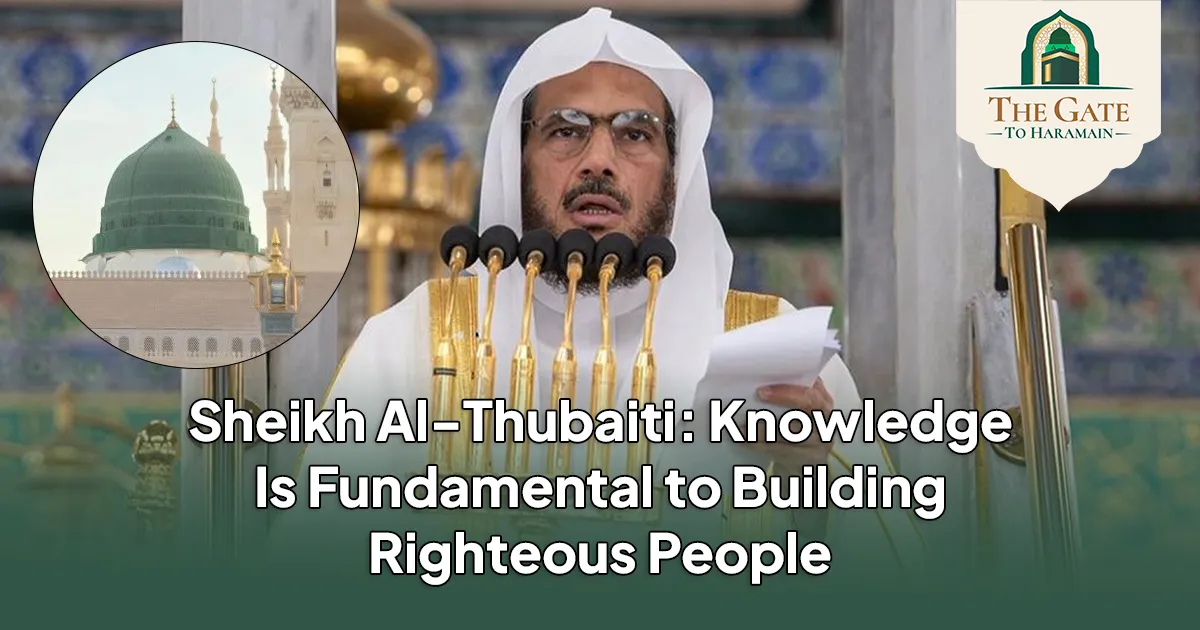
Schools are opening back up all over the Muslim world. And on a recent Friday, Sheikh Dr. Abdulbari bin Awad Al-Thubaiti — the imam and khateeb at the Prophet’s Mosque in Medina — gave a whole sermon about it. Not the boring “study hard, get good grades” kind of talk. Something bigger.
He said learning isn’t just something you do to pass a test. It’s something you do to get closer to Allah.
Knowledge Is a Shortcut to Paradise
Here’s the big claim: Allah made knowledge a path to Paradise.
Think about that for a second. The very first words ever sent down to Prophet Muhammad ﷺ weren’t a rule or a warning. They were a command to read: “Read in the name of your Lord.” Out of everything Allah could have said first, He picked that. Reading. Learning.
Why? Because knowing things — really knowing your religion, understanding right from wrong — is what builds a good person from the inside out. The Quran even says it straight: only the people who know stuff truly fear and respect Allah the way they should (Surah Fatir, verse 28).
Wait — Does That Only Count for Islamic Studies?
Nope. This is the part that might surprise you.
The sermon said any subject that actually helps people counts as a good deed. Math. Science. Medicine. Engineering. If you’re learning something that helps other humans or protects your community, and you’re doing it with good intentions, that’s not “just school.” That’s worship. That’s charity that keeps paying out, even years later.
So next time you’re stuck doing a science worksheet, you can look at it differently: this is you building the tools to help people someday. That’s not nothing.
Your Teacher Is Doing More Than You Think
The sermon called the teacher “the beating heart of education.” Not the textbook. Not the whiteboard. The teacher.
A good teacher isn’t just dumping facts into your head so you can pass a test. They’re trying to shape who you become — your character, your values, your connection to Allah. Every time a teacher:
- clears up something confusing for you,
- teaches you a value that sticks with you for life,
- or shows up for you on a bad day,
that gets noticed by Allah. The Prophet ﷺ said: “Whoever guides someone to good gets a reward like the one who does it.” So a teacher who helps you become a good doctor, engineer, or just a good person? They get rewarded right alongside you, forever.
That’s why the sermon says good teachers need to be:
- Fair — treat every student the same, no favorites.
- Patient and kind — even when students mess up.
- Gentle — because gentleness makes everything better, and harshness ruins it.
- A good example — kids copy what they see way more than what they hear. Actions talk louder than lectures.
What This Means for You as a Student
Here’s a line from the sermon that’s worth remembering: everything adults build — schools, universities, all of it — it’s for you. That’s a lot of trust being placed in you. So the sermon says take it seriously.
But here’s the twist: getting good grades isn’t actually the whole point. The sermon put it like this — a truly educated person is someone whose knowledge shows up in how they act, not just what they know. You can memorize every fact in the textbook, but if it doesn’t make you kinder, more honest, and more respectful, something’s missing.
One specific thing the sermon asked of students: respect your teachers. Respecting your teacher is basically a way of respecting knowledge itself.
Choose Your Friends Carefully — Seriously
This part is super practical. The sermon says your friend group can make or break you.
A good friend pushes you to work harder, reminds you when you’re slacking off, and helps you do the right thing. A bad friend does the opposite — wastes your time, drags down your motivation, and pulls your focus away from your goals.
The Quran promises something huge for people who combine faith with knowledge: Allah raises them in rank (Surah Al-Mujadila, verse 11). So who you hang out with actually matters for that journey.
Phones, Games, and the Internet — Use Your Brain
The second half of the sermon talked about something every 12-year-old actually cares about: screens.
The internet isn’t going away — it’s part of how you learn now. But the sermon gave some real rules for using it wisely:
- Chase what’s useful, avoid what’s harmful. Not every app or video is good for you just because it’s popular.
- Check before you believe or share. Fake news and rumors spread fast online. Don’t repeat something just because you saw it somewhere.
- Don’t let it change who you are. Using cool new tech is fine — losing your values because of it isn’t.
- Represent your faith well. What you post and how you act online reflects on you and your community.
The sermon backed this up with a strong warning from the Quran: your hearing, your sight, and your heart — every one of them will be questioned about how you used them (Surah Al-Isra, verse 36). Even scrolling isn’t “just scrolling.” It counts.
The Big Takeaway
Put it all together and the message is simple:
- School subjects aren’t just school subjects — they’re a chance to do good.
- Your teacher isn’t just teaching you facts — they’re helping shape who you become.
- Your character matters as much as your grades, maybe more.
- Your friends are either pulling you up or pulling you down — pick wisely.
- Your phone isn’t neutral — how you use it actually counts with Allah.
The sermon ended with a prayer for Muslims everywhere — including a special prayer for the people of Palestine — and for guidance, safety, and unity for the whole community.
So next time you’re heading to school, remember: this isn’t just about grades. It’s part of your path to being a better Muslim, and a better person.