Hajj 2027: Why a Health Certificate Now Decides Who Gets a Visa
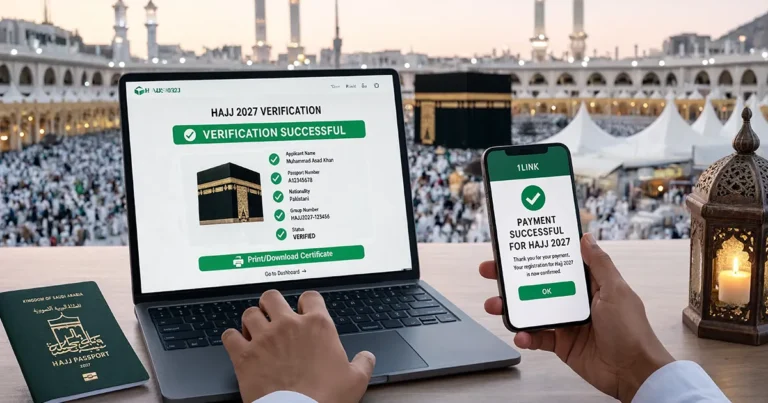
A Hajj visa for 2027 will no longer be issued on paperwork alone. Saudi Arabia’s Ministry of Hajj and Umrah (MOHU) has made a Health Clearance Certificate mandatory for every pilgrim, processed through the official Nusuk Masar platform before travel documents are approved. Pilgrims with serious conditions, including organ failure and advanced pregnancy, will not be cleared to go.
For families in Pakistan planning a first or a fifth Hajj, this changes the order of operations. Health screening now comes before booking, not after.
Why Saudi Arabia Tightened the Rule
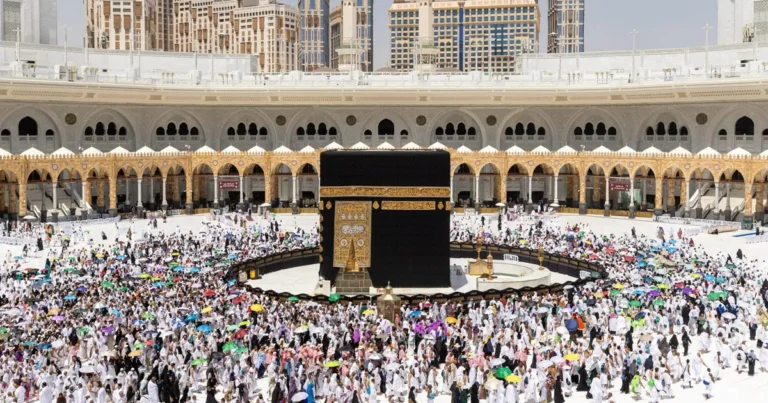
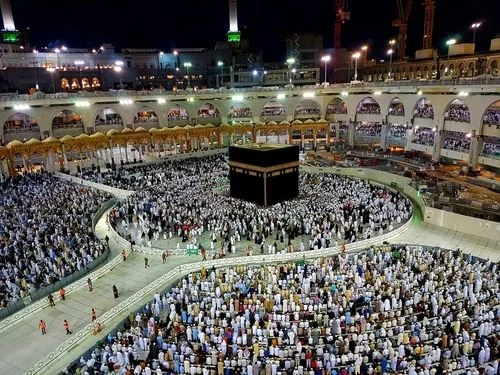
Hajj is physically brutal in a way that’s easy to underestimate from a brochure. Pilgrims walk up to 25 kilometers a day, in crowds of over a million people, in heat that regularly passes 45°C. There’s no gentle version of Tawaf in July heat.
The 2024 season made the stakes impossible to ignore. Heat-related deaths that year fell disproportionately on pilgrims who were medically vulnerable or performing Hajj without registration, outside the system that could have screened them beforehand. That’s the direct catalyst for MOHU’s stricter enforcement. The logic is straightforward: catch the risk before departure, not in a Mina field hospital.
The certificate also extends screening habits Saudi authorities built during COVID-19 and earlier outbreaks of MERS-CoV and meningitis. Public health infrastructure that already existed for infectious disease is now doing double duty for physical fitness.
The Disqualifying Conditions
MOHU’s guidance sets out specific conditions that will stop a pilgrim from being cleared for Hajj 2027. A medical fitness exam, done in two stages in some countries including India, has to certify the pilgrim is free of these before a certificate is issued:
- Organ failure: dialysis-dependent kidney failure, or heart failure with symptoms on minimal exertion
- Chronic lung disease requiring oxygen
- Severe neurological or psychiatric disorders affecting cognition, or significant motor disability
- Advanced dementia, especially combined with older age
- Active cancer under chemotherapy or intensive immunosuppressive treatment
- Active infectious disease that poses a public health risk, such as open pulmonary tuberculosis
- High-risk pregnancy, or pregnancy in the final trimester
None of this is arbitrary. Each condition on the list is one that heat, crowd density, or days of continuous walking could turn into a medical emergency far from adequate care.
Wheelchairs, Age, and “Physical Independence”
The rule that surprises the most families: Hajj organizers now expect pilgrims to perform the rites independently. Walking sticks for light support are generally fine. Full dependence on a wheelchair or mobility scooter usually isn’t.
Elderly pilgrims aren’t barred outright. But travel medicine specialists are blunt that anyone over 65 needs an honest fitness assessment before they commit to a package. If the need for a wheelchair traces back to advanced organ failure or a severe neurological condition, the visa will likely be refused. Where a wheelchair is approved purely for basic mobility support, organizers require the pilgrim to travel with a young, physically capable companion, someone who can actually push a chair through crowds where movement sometimes stalls for twenty minutes at a stretch.
How the Health Clearance Actually Works
The days of a handwritten note from a family doctor are over. Here’s the path pilgrims now follow:
- Get screened at an authorized facility. Each country’s national Hajj mission designates approved healthcare centers. Rules and deadlines vary (India, for instance, runs the screening in two stages), so pilgrims need to confirm requirements with their own national Hajj committee rather than assume the process is identical everywhere.
- Results feed into Nusuk Masar. Screening outcomes are entered into the platform, which generates the Health Clearance Certificate.
- The certificate travels with the visa application. Saudi authorities can, and do, check it again at entry points, so it isn’t a box to tick and forget.
Don’t rely on WhatsApp forwards or agent hearsay for the details. Official Saudi health circulars and instructions from your country’s Pilgrims’ Affairs Office are the only sources worth trusting on timelines.
Vaccines Are Still Separate — and Still Required
Here’s a mistake worth avoiding: assuming the new medical clearance replaces vaccination requirements. It doesn’t. Both apply, in parallel.
The quadrivalent meningococcal (ACWY) vaccine is mandatory for anyone entering Hajj areas, and it has to be administered at least 10 days before arrival. According to Nusuk’s official health guidance, the quadruple polysaccharide version stays valid for three years, while the conjugate version is valid for five. Worth checking against your last dose before you assume you’re covered.
Depending on where a pilgrim is traveling from, polio and yellow fever vaccines are often added to that list. Nusuk’s guidelines specify the polio dose should be taken between four weeks and twelve months before travel for pilgrims arriving from regions where the virus still circulates. All of it needs to be uploaded to Nusuk and carried as physical proof (a Yellow Card, in most countries) during the trip itself.
Book the Clearance Before the Deposit
This is the financial trap Hajj organizers keep warning about: don’t pay a non-refundable deposit before you know you’ll pass the medical exam. Visa approval is now electronically tied to health records, so a rejected certificate after a package is booked isn’t just disappointing. It’s expensive. And a pilgrim who skips the screening entirely but is found medically unfit on arrival in Saudi Arabia faces deportation, at their own cost.
Once in the Kingdom, pilgrims are also expected to carry a Nusuk Card as their primary identification, needed to move between Makkah, Madinah, Mina, Arafat, and Muzdalifah, according to national Hajj mission guidelines circulated for the 2027 season.
Quick Answers for Pilgrims Planning Hajj 2027
Do I need the Health Clearance Certificate even if I’ve performed Hajj before?
Yes. The certificate applies to every pilgrim for the 2027 season, regardless of prior Hajj history.
Can I use a wheelchair for Hajj 2027?
Only for basic mobility support, and only if a physically capable companion travels with you. A wheelchair needed because of organ failure or a severe neurological condition will likely result in a denied visa.
Does the medical clearance replace vaccination requirements?
No. Vaccinations, including the mandatory meningococcal ACWY vaccine and often polio and yellow fever depending on your country of origin, remain a separate, parallel requirement.
When should I get screened relative to booking my Hajj package?
Before paying any non-refundable deposit. Visa approval is now tied to your health record, so booking first and screening later risks real financial loss if you’re not cleared.
Who decides the exact screening process in my country?
Your national Hajj committee or Pilgrims’ Affairs Office. Screening facilities, stages, and deadlines are set locally (India’s process runs in two stages, for example), so don’t assume your country’s rules match a neighbor’s.
None of this makes Hajj harder to perform — it makes it harder to perform unprepared. Pilgrims who start with the medical screening, keep their vaccination records current, and confirm requirements through their national Hajj committee are the ones who reach Makkah without a bureaucratic surprise waiting for them. The rest of the trip can then be about the reason they’re going in the first place.