
Hajj 2027 Registration Is Now Fully Digital — Here’s Everything Pakistani Pilgrims Need to Know
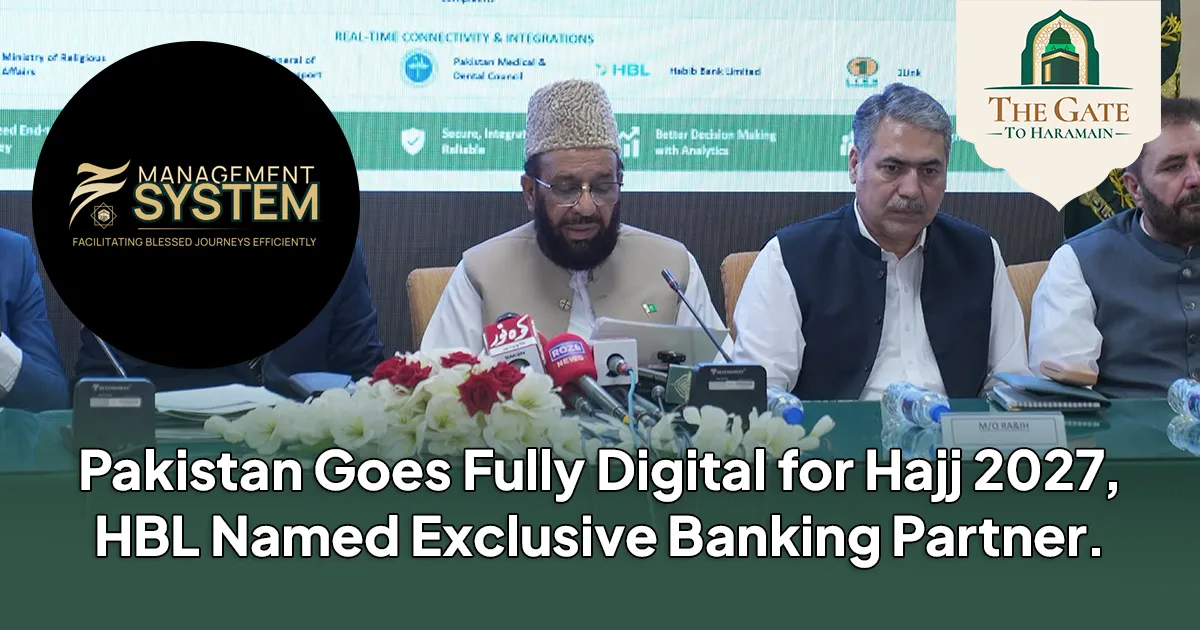
The Ministry of Religious Affairs has opened the next phase of Hajj 2027 registration, and this year the whole process — application, payment, medical clearance, even flight and hotel details — runs through one digital system. No more standing in line at a bank branch with a stack of photocopies. The Prime Minister’s office, working with the National IT Board (NITB), built this system with one goal: pull the paperwork, and the opportunities for fraud that came with it, out of the Hajj process entirely.
Here’s what’s actually changing, what it costs, and what you need to do before the deadlines hit.
Key Dates and Quota
The next application phase opens August 17, 2026. It’s for the roughly 400,000 pilgrims who already pre-registered and are now finalizing their applications.
The total Hajj 2027 quota breaks down like this:
- Government Hajj Scheme: 107,526 seats
- Private Hajj Scheme: 71,684 seats
Registration for 2028 through 2030 is still open in the background. If this year’s seats fill up before your application clears, you’re not shut out — you get placed on a waiting list for the following year.
What the Packages Cost
The government is running two schemes for 2027:
|
Scheme |
Duration |
Price |
|---|---|---|
|
Long Hajj Scheme |
40 days |
Rs. 1.2 million |
|
Short Hajj Scheme |
20–25 days |
Rs. 1.3 million |
The Short Hajj Scheme is capped at 30,000 seats, and it’s strictly first-come, first-served — once those seats are gone, they’re gone, regardless of when you started your application.
How the Payment Schedule Works
Payments are split into two installments:
- First installment (from August 17): 50% of the total package — Rs. 600,000 for Long Hajj, Rs. 650,000 for Short Hajj.
- Second installment: due in the first week of October.
You’ve got three ways to pay through the Pak Hajj App or the Hajj Portal:
- One Link (PSID) — generates a unique ID for online bank transfers
- Credit or debit card — pay directly in the app, which matters if you’re an overseas Pakistani who’d otherwise have to remit funds home first
- Digital challan — download it from the app and pay at any Habib Bank Limited branch
One thing worth repeating: the system is first-come, first-served. Once the seat allocation is full, online payments stop being accepted automatically — there’s no waiting in a queue hoping a spot opens.
Step-by-Step: Filling the Form and Making Your Payment
The Ministry has broken the process down into four clear stages. Here’s exactly how each one works.
1. Filling out the online form
Head to the Ministry of Religious Affairs’ official Hajj portal (mora.gov.pk) or the Pak Hajj App. Enter your CNIC number, passport details, and the rest of the required information. Once the form is complete, hit “Submit” — the system saves your application automatically from that point on.
2. Generating your PSID
The moment your form is finally submitted, a unique 17-digit PSID (Payment Slip ID) appears on your screen. That same number gets sent to you again by SMS and email, so there’s no risk of losing it. This PSID is what identifies your specific payment going forward — you’ll need it for whichever payment method you choose.
3. Paying through 1LINK or your banking app
You can transfer your payment using any bank’s official app — HBL, UBL, Meezan, and others all work — or through internet banking:
- Log into your banking app and go to the “Bill Payment” or “Government Payments” section
- Select the 1BILL (Invoice/Challan) option
- Enter the 17-digit PSID you were given
- The system automatically pulls up the Ministry of Religious Affairs’ name and the amount due for your current installment
- Confirm the amount and tap “Pay” — the transfer goes through immediately
4. Paying by credit or debit card
For the first time, the government is also accepting direct card payments. After you submit your form on the Hajj portal, look for the “Pay via Credit/Debit Card” button right where your PSID appears. Tap it, then enter your 16-digit card number, expiry date, and the 3-digit CVV from the back of the card (Visa and Mastercard both work). A one-time password (OTP) will be sent to your registered mobile number — enter that to complete the payment.
A note on Easypaisa and JazzCash: the same 1BILL option works through both mobile wallets, not just bank apps. Whichever method you use, you’ll get a confirmation message from your bank and a separate one from the Ministry of Religious Affairs once the payment is recorded.
HBL Is Handling the Money
Habib Bank Limited is the official banking and processing partner for Hajj 2027, and the scale here is real: over 1,700 branches, including 650 dedicated Islamic banking branches and 505 Islamic windows.
A few things stand out about the arrangement:
- HBL has waived digital payment charges entirely — no service fees for Hajj applicants
- Every product and process on offer is Shariah-compliant
- In areas without a physical HBL branch, mobile banking units will be deployed to reach pilgrims directly
New Rules for Private Hajj Pilgrims
If you’re going through a private operator, the rules changed too. Private scheme pilgrims now have to book through the same Pak Hajj App or Hajj Portal — not through the operator’s own office.
- You can browse and select from 25 government-approved private Hajj organizers, with offerings ranging from Elite packages to mid-range, standard-facility options
- Paying an operator directly is now prohibited. Every transaction has to run through the official digital system
This isn’t a minor bureaucratic tweak. It’s a direct response to a real problem: operators who’d collect hundreds of applications and quietly process a fraction of them, leaving pilgrims out thousands of rupees with nothing to show for it. With payments recorded centrally, the Ministry, the operator, and the pilgrim all see the same record of what was paid and to whom — and if something goes wrong, there’s a retrieval system in place to raise a complaint.
You don’t need to register to browse, either. The list of 25 organizers and their packages is publicly viewable on the app and portal. Registration only becomes necessary once you’re ready to actually select a package and pay.
A 13-Step Digital Journey
The backbone of all this is a system that talks to the Passport Office directly. Enter your passport number, and it pulls your name, date of birth, and other details automatically — no manual forms, fewer chances for a typo to cause problems later.
The Ministry describes the full pilgrim journey as 13 steps, covering everything from registration to in-country support. As of the August 10, 2026 announcement, the first four — data integration and registration — are already live. The rest roll out as the government issues further guidance, and based on what’s been confirmed, they include:
- Package selection (Long or Short Hajj, via the app or portal)
- Payment of dues across the two installments
- Verification of payment and application details
- Medical certification upload and management
- Hajj camp training schedules and information
- Flight and visa details, delivered straight to your portal or app
- Accommodation assignment in Makkah and Madinah
- 24/7 in-journey support once you’re in Saudi Arabia
Health Eligibility: Who Can and Can’t Apply for Hajj 2027
Alongside the digital rollout, the Saudi Ministry of Health and Ministry of Religious Affairs of Pakistan have issued joint guidance on medical eligibility. The rule is straightforward: only applicants physically capable of carrying out the demands of the Hajj journey will be permitted to go.
The following are not eligible for Hajj 2027:
- Patients with severe heart, lung, liver, or kidney failure
- Individuals with neurological or psychiatric conditions that impair comprehension or decision-making
- Those with severe physical or mental disabilities
- Women in the final two months of pregnancy, or facing pregnancy complications
- Cancer patients currently undergoing chemotherapy, radiotherapy, or biological treatment
- Anyone with an active infectious disease such as tuberculosis, dengue, or measles
- Vaccinations are mandatory. Every pilgrim must receive all vaccines approved by the Saudi government before departure. Applicants who have not completed the required vaccinations will not be granted permission to travel.
- The medical certificate matters. All existing medical conditions must be declared on the certificate, and it has to be verified by an authorized government doctor. This is the document referenced earlier in the application checklist.
- Concealing or misrepresenting medical information carries real consequences. An applicant who hides a condition or provides false information will be personally responsible for all resulting costs including the treatment, repatriation, everything. Doctors or institutions found to have issued a false medical certificate can also face legal and disciplinary action.
The Ministry of Religious Affairs notes that further medical guidelines and the final policy for Hajj 2027 will follow through its official notifications, so this list may be updated.
Before You Apply
A short checklist worth acting on now:
- Get your documents ready. Your passport and medical certificate (once the Ministry uploads it) both need to be in order before the portal opens.
- Only trust official channels. That means the Ministry of Religious Affairs’ verified social accounts, its website, or the Pak Hajj App — nothing else.
- If you’re owed a 2026 refund: reconciliation is expected to wrap up by December, with refunds likely going out in January.
Frequently Asked Questions
What are the 13 steps of the pilgrim’s digital journey?
The Ministry hasn’t published a numbered list, but it’s confirmed the first four steps — passport-linked data integration and registration for the ~400,000 pre-registered pilgrims — are complete. The remaining steps cover package selection, the two-installment payment process, verification, medical certification, Hajj camp training, flight and visa details, Makkah/Madinah accommodation, and 24/7 support during the trip.
How can overseas Pakistanis use the Pak Hajj App?
The same way as anyone else, minus the remittance headache. Overseas applicants can pay directly by credit or debit card instead of wiring money to Pakistan first, and the passport-number lookup fills in their personal details automatically. They can also browse and select private-scheme packages and manage medical, flight, and accommodation details entirely through the app.
How do I download the digital challan?
Open the Pak Hajj App, select the digital challan option, and the system generates a form pre-filled with your details from the Passport Office. Download it, then take it to any HBL branch, where staff verify the details before processing your payment.
Who are the 25 approved private organizers, and how do I compare them?
They’re listed in full on the Pak Hajj App and Hajj Portal, with packages ranging from Elite to mid-range. Pricing and service details that used to be negotiated privately are now standardized and visible to everyone before you choose — you compare, select, then pay only through the official digital system, never the operator directly.
Can I switch private organizers after paying?
The Ministry hasn’t addressed this directly. What is confirmed is that payments are recorded against a specific company and package, and there’s a retrieval system for complaints about service — whether that extends to switching operators isn’t stated. If this applies to you, contact the Ministry of Religious Affairs directly or check the Pak Hajj App’s support section.
Can I view the 25 companies without registering first?
Yes. The portal and app are open to the general public for browsing. Registration and passport verification only come into play when you’re ready to actually select a package and make a payment.
Can I pay through Easypaisa or JazzCash instead of a bank?
Yes. Both mobile wallets support the same 1BILL option used by banking apps — log in, select 1BILL (Invoice/Challan), enter your 17-digit PSID, and confirm the amount. You’ll receive a confirmation message from your wallet provider and a separate one from the Ministry of Religious Affairs once the payment is recorded.
This digital overhaul is the Ministry’s clearest attempt yet to close the gap where fraud used to live — between what a pilgrim paid and what an operator actually delivered. For the roughly 400,000 families now finalizing their applications, it means a paper trail that didn’t exist before.