
Prophet’s Mosque Friday Sermon: Contentment Is the Greatest Treasure and the Key to True Happiness
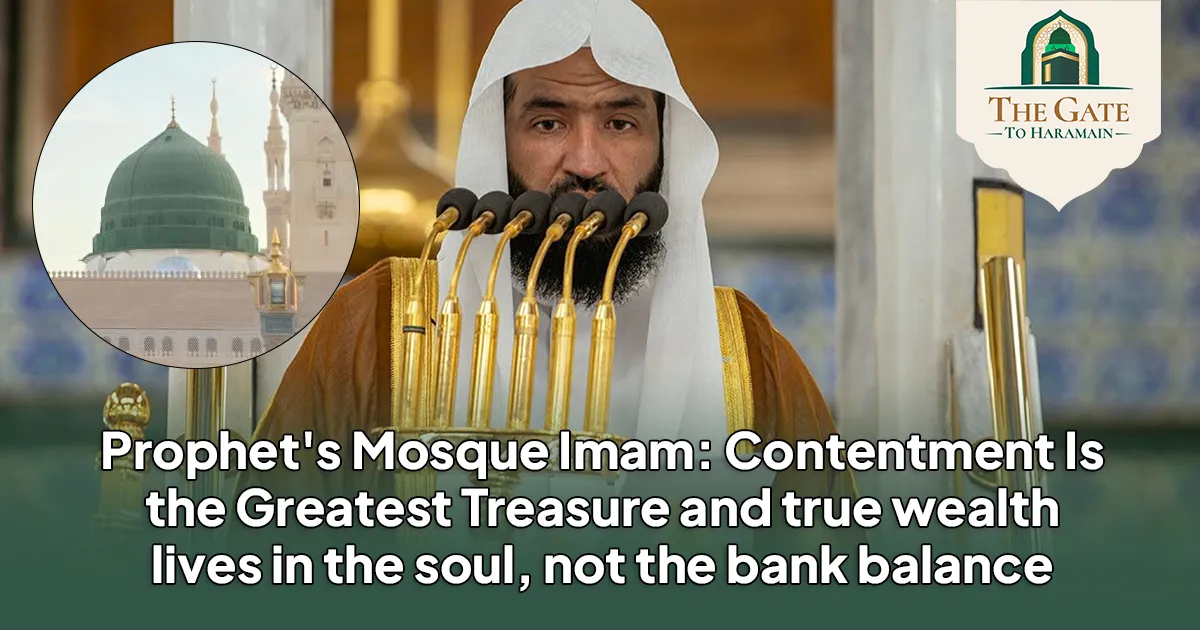
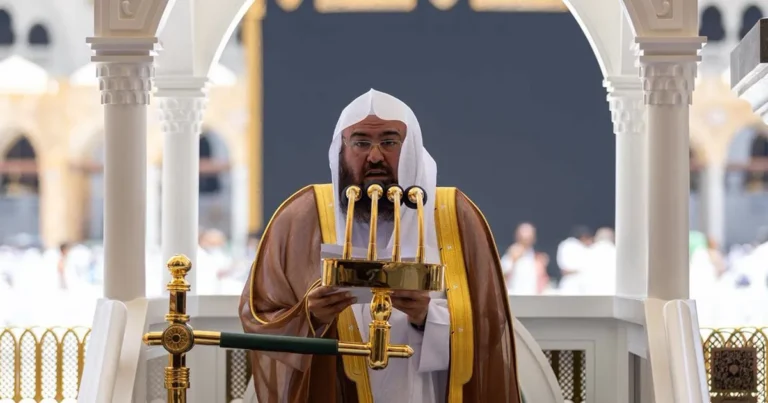
Madinah, Friday 2 October 2026 (21 Rabi’ al-Thani 1448 AH). Sheikh Abdullah bin Abdul Rahman Al-Buaijan, Imam and Khateeb of the Prophet’s Mosque (Al-Masjid An-Nabawi), delivered today’s Friday sermon on contentment (Qana’ah). He described it as true wealth that brings happiness, and said it does not mean giving up work or ambition. He also urged worshippers to show kindness to the poor and to keep their blessings from becoming a source of pain for others.
The sermon came at a time when, in his words, temptations have multiplied and competition over worldly things has grown fierce.
Who spoke and what he said
Sheikh Al-Buaijan opened by advising worshippers to fear God. He said God-consciousness eases matters, expiates sins and increases reward. He recited the verse: “O you who have believed, fear God as He should be feared and do not die except as Muslims” (Quran 3:102).
He then described how God created humankind with His wisdom, brought it into being with His power and showered it with blessings. God alone is unique in creation, command, decree and management. Within that order, God has divided provision (Arzaq) among His servants and made their lifespans (Ajal) and circumstances (Ahwal) different from one another.
Two kinds of people
From that distribution, the Sheikh said, two types of people emerge.
The content soul. The person who accepts what God has allotted finds peace of mind and tranquility of soul. Their heart is reassured and their life is good.
The discontented soul. The person who keeps looking at what others have is overcome by resentment (Sakhata) and consumed by greed (Thama’). He becomes poor in heart, even if his wealth is abundant.
He reminded the congregation that God ordained all things before creating the heavens and the earth, including lifespans and provisions. A person receives only what was written for him, and nothing that was written will pass him by. That belief should bring reassurance, he said, while a person still takes the permissible steps and does not become fixated on what is written. Anyone weighed down by financial strain or by the chase for status, he said, can find relief in trusting the Divine decree (Qadar).
What contentment means
The Imam called contentment the greatest treasure a person can possess, and the true wealth that brings happiness. He defined it in four parts:
- Being satisfied with what God has allotted
- Not coveting what is in other people’s hands
- Finding sufficiency in what is available, rather than fixating on what is absent
- Not yearning for what is lost
Guidance from the Sunnah
The Sheikh drew on several prophetic traditions to show that real prosperity is an inner state.
On the standard of success, the Prophet (ﷺ) said: “He has succeeded who accepts Islam, is provided with sufficient sustenance, and Allah makes him content with what He has given him” (Muslim).
On wealth, the Prophet (ﷺ) said: “Wealth is not in having many possessions, but wealth is the wealth of the soul” (agreed upon).
He also cited the narration from Abu Hurairah (may God be pleased with him), who reported that the Prophet (ﷺ) asked: “Who will take these words from me and act upon them, or teach them to someone who will act upon them?” Abu Hurairah said: “I will, O Messenger of God.” The Prophet (ﷺ) took his hand and counted five pieces of advice:
- Avoid what is forbidden, and you will be the most devout of people.
- Be content with what God has allotted you, and you will be the richest of people.
- Be kind to your neighbor, and you will be a believer.
- Love for people what you love for yourself, and you will be a Muslim.
- Do not laugh too much, for excessive laughter kills the heart.
To reinforce the point, the Sheikh recited classical lines of poetry: “Indeed, the rich person is rich in soul, even if bare-shouldered and barefoot. Not everything above the earth is sufficient; but if you are content, then everything is sufficient.”
Contentment is not laziness
A key part of the sermon dealt with a common misunderstanding. The Sheikh rejected the idea that contentment breeds idleness or a lack of ambition.
“Contentment does not mean abandoning work, nor relinquishing the pursuit of provision, nor abandoning ambition, nor surrendering to helplessness, nor accepting negligence.”
Contentment, he explained, means working diligently and taking every legitimate step (Asbab), while the heart stays attached to God and accepts whatever outcome He decrees. It joins striving (Sa’i) with satisfaction (Rida), and action with trust in God (Tawakkul). He added that whoever makes worldly accumulation his only goal will never be satisfied, while whoever makes God’s pleasure his goal will find God sufficient for his concerns.
The Sheikh also stressed that the need for contentment is greater today because it restores tranquility to homes and peace to hearts.
The comparison trap
Speaking about modern life, the Sheikh said society increasingly measures happiness by what a person owns, personal worth by what he wears and social standing by what he displays in public. With endless images and video clips in front of us, many fall into the trap of comparison (Muqaranat).
“The mind inclines toward comparison, so a person sees the blessings given to others while forgetting Allah’s blessings upon themselves; they see what they lack while ignoring what they possess.”
Contentment, he said, protects the soul from constant comparison, shields it from envy and greed, and lets a person live in an inner peace that the storms of worldly ambition cannot shake.
Practical keys to a content heart
The Sheikh outlined several ways to nurture contentment in daily life.
1. Believe in the Divine decree. God is Wise and Merciful. Whatever reaches a believer was never going to miss him, and whatever misses him was never going to reach him. The Sheikh recalled the Prophet’s (ﷺ) remark on the believer’s remarkable state: if ease comes, he gives thanks, and that is good for him. If hardship strikes, he endures with patience, and that too is good for him.
2. Reflect on the wisdom behind differences in provision. In the second sermon, he called this the most important aid to contentment. God varied livelihoods and ranks so that the earth may be developed and people may exchange benefits and interests. He cited God’s words: “Is it they who distribute the mercy of your Lord? We have distributed among them their livelihood in the life of this world and raised some of them above others in degrees [of rank] so that some of them may make use of others for service. But the mercy of your Lord is better than whatever they accumulate” (Quran 43:32). Because no soul will die before receiving its full written provision, the Prophet (ﷺ) told believers to be moderate in seeking worldly gain (“Ajmilu fi at-talab”).
3. Practice moderation (Iqtisad). Avoid extravagance and wastefulness (Tabdheer). The Sheikh reminded the congregation that spendthrifts are described as companions of destructive forces (Quran 17:26–27).
4. Recognize the real blessings. The greatest ones are not commercial goods. They are a sound heart (Qalb Salim), firm faith, health, safety, family and daily well-being.
5. Say the fourfold prayer of gratitude. The Sheikh encouraged every believer to say it from the depths of the heart:
“Praise be to Allah for what He gave, praise be to Allah for what He withheld, praise be to Allah for what He preserved, and praise be to Allah for what He averted.”
Second sermon: testing, kindness and social media
In the second sermon, the Imam widened the topic from a personal virtue to a social responsibility. He said contentment is a spiritual cure for societal ills such as jealousy, hatred, resentment, greed and chronic anxiety.
He explained that God tests His servants with both good and bad. The poor are tested through poverty and the rich through wealth. He recited: “And We will test you with evil and good as a trial; and to Us you will be returned” (Quran 21:35). The rich, he said, are tested with gratitude and the poor with patience.
The Sheikh then issued a stern warning about showing off wealth on social media. He said photographing and broadcasting luxury clothes, fine dining, exotic trips, grand homes and expensive cars damages the social fabric. Behind those screens, he noted, are people struggling to afford basic necessities, poor families who cannot afford luxuries and heartbroken parents who cannot give their children what those children see online.
“Not everything you own is suitable to show, and not everything you can do should be displayed to people… Perfect chivalry (Kamal al-Muru’ah) requires that you rejoice in Allah’s blessings without making your joy a cause for another’s sadness, or your happiness a cause for a poor person’s heartbreak.”
If God expands your provision, he said, show His favor through charity, righteousness, generosity and feeding the hungry, not through images that weigh on other people’s hearts.
He closed by urging kindness toward the weak, the needy and the poor. He asked worshippers to protect their blessings from boasting and showing off, so that these do not break hearts or weaken others’ contentment. As he put it: “For indeed, among blessings are those whose gratitude lies in concealing them.”
Five takeaways from the sermon
1. Some blessings are best kept quiet. Many people assume that displaying blessings publicly is a form of gratitude (Tahadduth bi an-ni’mah). The Sheikh reframed this, saying that broadcasting luxury can hurt the poor and strip others of peace.
2. Don’t judge your life by someone else’s exterior. “Do not compare the exterior of your life with the exterior of theirs, for you do not know what lies behind screens and closed doors.” Public posts show only a curated surface and hide private burdens and trials.
3. Thank God for what He withheld as well as what He gave. Gratitude usually centers on what we acquire. The sermon extended it to what God withheld and averted, since that withholding is often a hidden protection.
4. Contentment drives effort rather than replacing it. It governs how the heart responds to outcomes while the body stays fully engaged in work. In the Sheikh’s words, you work and strive “while your heart remains attached to your Lord, satisfied after putting in the effort with whatever He has apportioned.”
5. Poverty of the heart can outweigh a fortune. A person can hold millions in bank balances and property and still live in constant distress if his eyes are fixed on what others own. “From among people is he who looks at what is in the hands of others, so discontent overcomes him and greed exhausts him, becoming poor in heart even if his wealth is abundant.”
At a glance
- Venue: Al-Masjid An-Nabawi (the Prophet’s Mosque), Madinah
- Date: Friday, 2 October 2026 (21 Rabi’ al-Thani 1448 AH)
- Imam and Khateeb: Sheikh Abdullah bin Abdul Rahman Al-Buaijan
- Theme: Contentment (Qana’ah), the greatest treasure and the key to true happiness
- Second sermon focus: God’s testing of the rich and the poor, wisdom in unequal provision, kindness to the vulnerable and protecting blessings from ostentation