
Three Shirts, One Lesson: Sheikh Al-Thubaiti’s Friday Sermon – Prophet’s Mosque 30 Oct 2026 (19 Jumada al-Awwal 1448 AH)

A single piece of cloth appears three times in the story of Prophet Yusuf (peace be upon him). Each time it tells a different truth. That was the heart of today’s khutbah in Madinah.
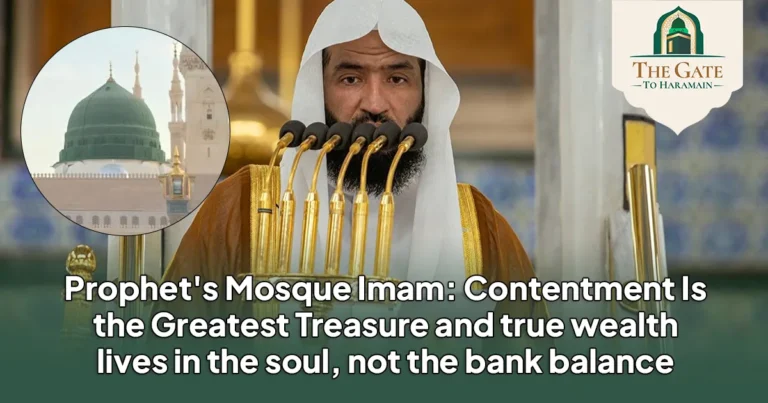
Today’s Friday sermon and prayer at the Prophet’s Mosque were led by His Eminence Sheikh Dr. Abdulbari bin Awad Al-Thubaiti. His subject was the shirt of Prophet Yusuf, and what it teaches is about patience, chastity, forgiveness, and trust in Allah’s planning.
It sounds like a small detail. It isn’t. Sheikh Al-Thubaiti showed the congregation that the whole story can be read through this one garment.
It starts with taqwa
Sheikh Al-Thubaiti opened by praising Allah for the blessings of security and faith. He then called the worshippers to taqwa, describing it as the believer’s provision, the light of their insight, and their shield against trials. He recalled the verse: “And fear Allah, and Allah teaches you.”
Everything else in the sermon rests on that foundation.
The first shirt: false blood and fake tears
The story begins with a dream. Young Yusuf told his father, Prophet Ya’qub (peace be upon them both), that he saw eleven stars, the sun and the moon prostrating to him. Ya’qub’s reply was quick and protective: do not tell your brothers.
Sheikh Al-Thubaiti pointed out the wisdom in that advice. Some blessings are better kept quiet. Envy grows in the heart, and once it settles, it can turn a family against itself. The brothers moved from “Yusuf is more beloved to our father than we are” to plotting his death and then to the well.
To cover the crime, they came back at night, weeping, carrying Yusuf’s shirt stained with false blood. That was the shirt’s first appearance.
Ya’qub was not fooled. He looked past the tears and said that their own souls had enticed them to something.
Sheikh Al-Thubaiti brought this straight into our own time:
“Not everyone who sheds tears and feigns weeping is oppressed, and not everyone accused is an oppressor.”
In an age where rumors travel faster than facts, he urged restraint before judging, whether at home, at work, or in a dispute. Check first. Decide later.
The second shirt: what you do when nobody is watching
Yusuf was pulled from the well, sold, and brought into the house of Al-Aziz in Egypt. Sheikh Al-Thubaiti called this one of the quietest and most subtle displays of divine providence. From the outside it looked like a slave being sold. In reality, Allah was moving Yusuf away from a murderous plot and into the palace of Egypt.
He asked a question worth sitting with: how many things have we taken for pure evil, only to find great good behind them later?
Then came the trial of temptation. The doors were locked. Yusuf was a stranger, far from his family and anyone who knew him. The one pressing him held power over his daily life. Every excuse was available, and Yusuf still said, “I seek refuge in Allah.” He ran for the door.
Sheikh Al-Thubaiti explained that true chastity is revealed when a person is alone and the chance to sin is right there. His words on the measure of taqwa were direct:
“What is your state when human eyes cannot see you?”
His practical advice followed from Yusuf’s example. Don’t stand around and negotiate with temptation. Stay away from places that invite it, and block the paths that lead there, to protect your faith, your life, and your honor.
As Yusuf fled, his shirt was torn from behind. That tear became the evidence. The torn back proved his innocence, and the garment that was meant to condemn him cleared his name. The shirt’s second appearance made it a witness to his chastity.
The third shirt: power, pardon and healing
Innocent, Yusuf was still imprisoned. Sheikh Al-Thubaiti noted that Yusuf did not turn bitter. He made the prison a place of kindness and guidance, and the other prisoners said, “We see you as one of the doers of good.” A believer, Sheikh Al-Thubaiti reminded the congregation, brings blessing wherever they are placed, and Allah does not waste the reward of those who do good.
Years later, famine brought Yusuf’s brothers to Egypt. They did not recognize him. He recognized them at once. He now held the power to punish them, and he did not use it.
“No blame will there be upon you today. May Allah forgive you; He is the Most Merciful of the merciful.”
Sheikh Al-Thubaiti called forgiveness from a position of strength the mark of a noble soul. Yusuf didn’t list their crimes or make them squirm. Letting go of the past, he said, opens the door to reconciliation and repairs what was broken.
Then Yusuf sent his shirt to his father: “Cast it over the face of my father; he will become seeing.” In the shirt’s final appearance, it carried good news, not false blood or a tear.
Sheikh Al-Thubaiti was careful on one point. The shirt was only the means. The One who heals is Allah alone.
And Ya’qub? After years of grief that cost him his sight, he never gave up hope. Before the caravan even arrived, he said he could smell Yusuf. Sheikh Al-Thubaiti closed this part of the sermon with the verse that Yusuf himself spoke at the end of his story: “Indeed, my Lord is subtle in what He wills. Indeed, He is the Knowing, the Wise.”
He asked the worshippers to reflect on how Allah made this one shirt serve His servant and how He puts at the service of the believers soldiers that only He knows.
The three shirts at a glance
- First appearance: stained with false blood, a witness to deception
- Second appearance: torn from behind, a witness to chastity
- Third appearance: cast over Ya’qub’s face, a means of healing and reunion
What to take home
- Keep some blessings quiet. Not every plan or success needs an audience.
- Verify before you judge. Tears and a dramatic story are not proof.
- Judge your taqwa in private. Character is what remains when no one can see you.
- Don’t rush to call a hardship a disaster. Yusuf’s well led to a palace.
- Forgive when you have the power not to. That is where real strength shows.
- Never write off Allah’s mercy. Ya’qub waited decades and was not disappointed.
The closing supplications and the prayer
In his closing duas, Sheikh Al-Thubaiti prayed for Islam and the Muslims, for the security and stability of the Kingdom of Saudi Arabia, and for those guarding its borders. He prayed for goodness and prosperity across the Muslim world and asked Allah to help the people of Palestine, feed the hungry, clothe the needy, and protect Al-Aqsa Mosque. He also prayed for success and guidance for the Custodian of the Two Holy Mosques and the Crown Prince.
Sheikh Al-Thubaiti then led the Friday prayer, reciting Surah At-Tin in the first rak’ah and Surah Al-Ma’un in the second.
The story of Yusuf is more than 3,000 years old, yet Sheikh Al-Thubaiti’s message today was simple: whatever you are carrying, whether it’s envy, a false accusation, a locked door or a long wait, Allah’s planning is wiser than your reading of events.