
How Intention Turns Daily Life into Worship: Masjid Al Haram Friday Sermon 6 Nov 2026 (19 Jumada al-Awwal 1448 AH)
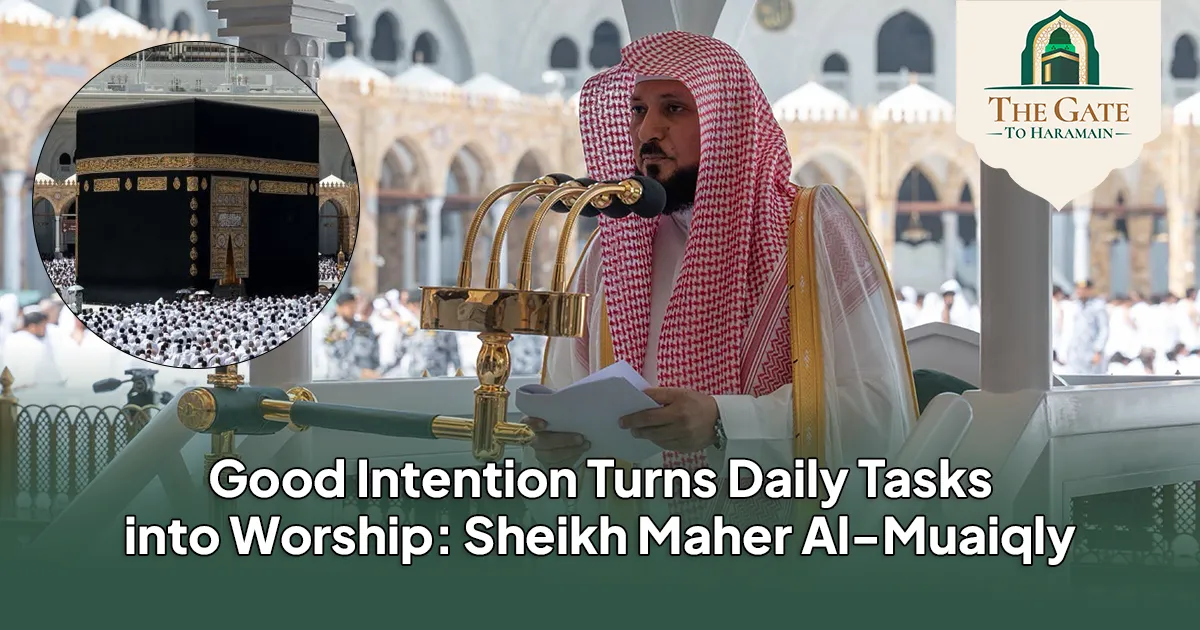
Transforming Daily Life into Worship: The Sacred Art of Sincere Intention (Ihtisab)
A Message from the Heart of Mecca
Every Friday, millions of eyes and ears turn toward the Grand Mosque (Al-Masjid Al-Haram) in Mecca to receive spiritual nourishment from the pulpit of Islam. In a recent Friday sermon delivered on 26 Jumada al-Ula 1448 AH, the speaker delivered a profound reminder addressing a silent crisis of modern faith: how to keep our everyday actions spiritually alive.
The sermon centered on a transformative concept known in Islamic tradition as Ihtisab—the intentional practice of seeking divine reward from Allah in every moment, routine, and trial of life. It offers a revolutionary perspective: worship is not an isolated set of rituals performed inside a mosque but an overarching framework that can turn sleep, meals, earning a living, family care, and even quiet suffering into heavy weights on one’s scale of good deeds.
1. Intention as the Alchemist of Human Action
The sermon began by laying down the spiritual engine of human behavior: the heart’s intention (Niyyah). Citing the legendary Hadith narrated by both Al-Bukhari and Muslim, the speaker reminded the congregation that Prophet Muhammad ﷺ said:
“Actions are judged by intentions, and every person will have only what they intended.”
Intention acts as a spiritual alchemist. It possesses the power to take a mundane, everyday habit (المباحات)—such as eating a meal to maintain physical strength, resting after work, or speaking kindly to a friend—and convert it into an act of worship (Qurbah) that draws a person closer to their Creator.
Conversely, the sermon delivered a stern warning regarding the illusion of outward deeds. A person might spend immense energy, time, and money on grand charitable projects, yet if their heart is attached to human praise (ثناء الناس والشكر), their reward vanishes. As the speaker eloquently noted:
“How many small deeds become magnificent in reward due to a righteous intention, and how many grand deeds deprive their doers of reward due to a corrupt intention?”
2. The Hidden Account: Rewards for Deeds You Couldn’t Perform
One of the most comforting dimensions of Ihtisab highlighted in the sermon is Allah’s immense generosity toward those whose hearts are truthful. Through sincere intention, a believer is credited with deeds they were physically unable to complete.
The speaker cited a moving Hadith from Al-Bukhari:
“If a servant falls ill or travels, there is written for him [the reward of] what he used to do when he was resident and healthy.”
When a believer establishes a habitual routine of good deeds—such as night prayers, voluntary fasting, or community service—and is suddenly sidelined by sickness, exhaustion, or travel, divine grace ensures their regular paycheck of spiritual rewards continues uninterrupted. Their sincere desire to act serves as a placeholder in the divine ledger.
3. Sleep as Worship: The Wisdom of Mu’adh ibn Jabal
To ground this concept in practical history, the speaker drew upon a remarkable dialogue between two prominent Companions of the Prophet ﷺ: Mu’adh ibn Jabal and Abu Musa al-Ash’ari.
When Abu Musa explained that he spent his days and nights reciting the Quran while standing, sitting, and traveling, Mu’adh shared his own secret to spiritual productivity:
“As for me, I sleep, and I stand in prayer, and I seek reward for my sleep just as I seek reward for my standing.”
Mu’adh understood that sleep, when taken with the intention of regaining strength to worship Allah and fulfill one’s duties during the night and day, becomes an act of devotion in itself. By aligning rest with divine purpose, sleep is no longer wasted time—it is active worship.
4. The Ultimate Sacrifice: Feeding the Guest in the Dark
The sermon illustrated the peak of Ihtisab through an unforgettable narrative from the Sunnah. A traveler arrived in Medina exhausted and starving. After finding no food in the homes of the Prophet’s wives—who possessed nothing but water—an Ansar Companion welcomed the stranger into his home.
Upon arriving, the Companion learned from his wife that their remaining food was barely enough for their small children. Demonstrating extraordinary altruism (I’thar), the couple devised a plan: the wife distracted the children until they fell asleep, served the meal to the guest, and then put out the oil lamp under the pretense of adjusting it. In the darkness, the hosts pretended to chew and eat so their guest could eat to his fill without feeling ashamed.
The next morning, Prophet Muhammad ﷺ greeted the Companion with divine tidings:
“Allah was amazed [and pleased] by what you two did for your guest last night.”
This story demonstrates that Ihtisab shines brightest when giving requires sacrifice, done purely for Allah without expecting recognition or return.
5. Domestic Life: Reimagining Family Care and Intimacy
A core emphasis of the sermon was removing the false divide between spiritual life and domestic responsibility. The speaker stressed that fulfilling family obligations is often viewed as a mere worldly burden, yet in the sight of Allah, it carries the weight of voluntary charity.
Citing Prophet Muhammad’s advice to Sa’d ibn Abi Waqqas:
“You will never spend an expenditure seeking therewith the Face of Allah except that you will be rewarded for it, even for the morsel of food you put into your wife’s mouth.”
Furthermore, the sermon highlighted a Hadith recorded in Sahih Muslim where the Prophet ﷺ declared that engaging in lawful intimacy with one’s spouse carries divine reward. When his followers asked how satisfying a natural human desire could yield reward, the Prophet ﷺ turned the logic around: if satisfying that desire through unlawful means (Haram) brings sin, then choosing the lawful (Halal) path to fulfill it naturally earns divine approval.
6. Finding Meaning in Pain: Ihtisab During Afflictions
In its second half, the sermon turned to life’s inevitable storms: illness, grief, financial loss, and emotional distress. The speaker urged believers to adopt Ihtisab as an anchor during trials.
When loss strikes, patience (Sabr) combined with Ihtisab transforms pain into spiritual elevation. The speaker quoted a breathtaking Hadith Qudsi from Al-Bukhari:
“Allah says, ‘My believing servant has no reward from Me when I take the life of his beloved companion from the people of the world, and he then seeks My reward (Ihtasaba), except Paradise.'”
Even when suffering lacks dramatic intensity, Ihtisab ensures no hardship is wasted. Citing the famous prophetic promise:
“No fatigue, illness, anxiety, sorrow, harm, or distress befalls a Muslim—even the prick of a thorn—except that Allah expiates some of his sins thereby.”
By recognizing that every ache and worry serves to cleanse one’s past missteps, a believer finds solace and dignity even in moments of physical or emotional vulnerability.
Conclusion: Living for What Endures
The sermon concluded with a powerful contrast between the fleeting nature of this world (Dunya) and the permanence of the Hereafter (Akhirah). Worldly comfort, no matter how bright, will eventually set like the evening sun. But deeds performed with a sincere heart for Allah endure forever.
Citing Surah Al-Baqarah (2:155-157), the sermon leaves us with a timeless roadmap for daily living: hold fast to sincere intentions, seek Allah’s reward in the quiet routines of home and work, and respond to life’s tests with patient trust. When Ihtisab becomes a way of life, every breath becomes a step closer to Paradise.