“Like Holding a Burning Coal” Masjid ul Haram Friday Sermon 24 July 2026 (10 Safar 1448)
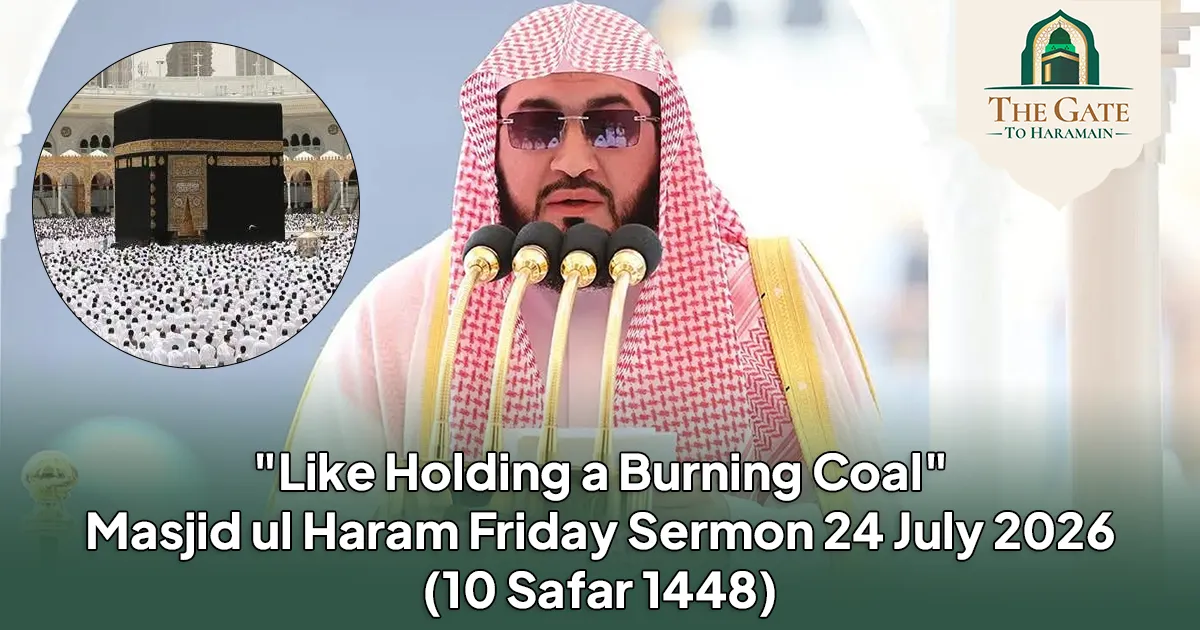
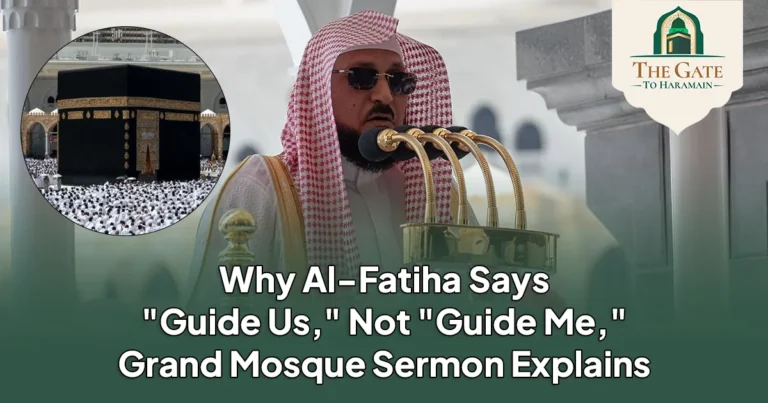
Every Friday, millions of Muslims tune in to hear what’s being said from the Mimbar of Masjid al-Haram in Makkah. Today’s sermon was delivered by Sheikh Bandar Balila, Imam and preacher of the Grand Mosque. The subject was one that never really goes out of season: how does a believer stay firm when everything around them seems built to pull them off course?
Here is a rundown of what he said, for anyone who missed the live broadcast or wants the main points laid out clearly.
The Problem He Named First
Sheikh Balilah opened with something most people feel but rarely name out loud: the further we get from the time of the Prophet ﷺ, the harder it seems to hold onto faith. Trials multiply. Doubts show up in new shapes. Desires get louder, and distractions the sermon’s word, not mine, but an accurate one keep following one after another.
He backed this up with a hadith from Anas ibn Malik, narrated in Sahih al-Bukhari, where the Prophet ﷺ said that no era passes except the one after it is harder, until people meet their Lord. It is not a comforting hadith. It is not meant to be. It is a warning dressed as an observation.
Why Losing Faith Is Worse Than Losing Money
This was the part of the sermon that hit hardest, and it is worth sitting with. Sheikh Bander Balila said plainly that the greatest calamity a believer can face is not poverty, is not losing your job, is not running out of money. It is the shaking of certainty. It is watching your own faith wobble.
That is why the Prophet ﷺ used to make a specific dua often: “Do not make our calamity in our religion.” Not our calamity in our health. Not in our wealth. In our religion because that’s the one loss that actually costs you something in the next life.
The heart, the Sheikh reminded the congregation, is constantly turning, described in the hadith as being held “between two of Allah’s fingers.” Nothing about faith is static. It needs active maintenance, or it drifts.
So What Actually Keeps Someone Steady?
Sheikh Balila laid out several things a Muslim can actually do not vague advice, but a working list.
Make dua, and mean it. This came first for a reason. He pointed to the Prophet’s own supplication: “O Turner of hearts, keep my heart firm on Your religion, and to the Quranic prayer many of us recite without quite feeling it: “Our Lord, let not our hearts deviate after You have guided us…” His point was simple: nobody stays firm on their own strength. Stability comes from Allah, and you ask for it.
Actually read the Quran, not just recite it. He was specific here: recitation, reflection (tadabbur), and then implementation. Reading verses without thinking about them, or thinking about them without living them, misses the point of the exercise.
Choose your company carefully. Surround yourself with people chasing the pleasure of Allah. Stay away from people who are careless about their deen or chasing their own desires, not out of judgment, but because company shapes conviction more than most people admit.
Study the people who came before. The stories of the Prophets and the Salaf, the early generations, are not just history lessons. They are proof that this has been done before, under worse conditions than most of us will ever face.
Keep showing up in small ways. Consistency in good deeds, even modest ones, was framed as more valuable than sporadic bursts of devotion. A straight path beats a dramatic one.
Avoid the rooms where faith gets mocked. Gatherings built around temptation, or where the signs of Allah are treated as a joke, do damage even if you think you’re just observing.
The Goal Behind All of It: A Good Ending
Here is where the sermon turned toward something bigger than daily habits. Sheikh Balila said the greatest honor Allah can give a servant is Husn al-Khatimah, a good ending, dying while still holding onto faith. Everything else the dua, the Quran, the company you keep is really in service of that one outcome.
Sheikh Balila said the way there is muraqaba: watching yourself in private the way you would behave in public. Because whoever is conscious of Allah when no one’s looking tends to be met with ease at the moment death actually comes.
Alongside that, he stressed sticking to the Sunnah of the Prophet ﷺ and his rightly-guided successors, and staying clear of religious innovation. And he closed with an image that’s stuck with Muslims for over a thousand years: the person who stays patient with their religion during real hardship is like someone holding a burning coal. It hurts. It’s still worth holding.
Also read: “The One Who Never Dies” Masjid ul Haram Friday Sermon 17 July 2026 (3/2/1448 AH)
The Duas at the End
The sermon closed the way Friday khutbahs at the Haramain usually do with supplication for the wider Ummah. Sheikh Balila prayed for:
- The strength and protection of Islam and Muslims everywhere
- The health and success of the Custodian of the Two Holy Mosques and the Crown Prince
- The soldiers stationed at the borders
- Victory and relief for the oppressed people of Palestine against the occupation