Pakistan’s 2027–2030 Hajj Policy: Full Details, Costs, and Booking Rules
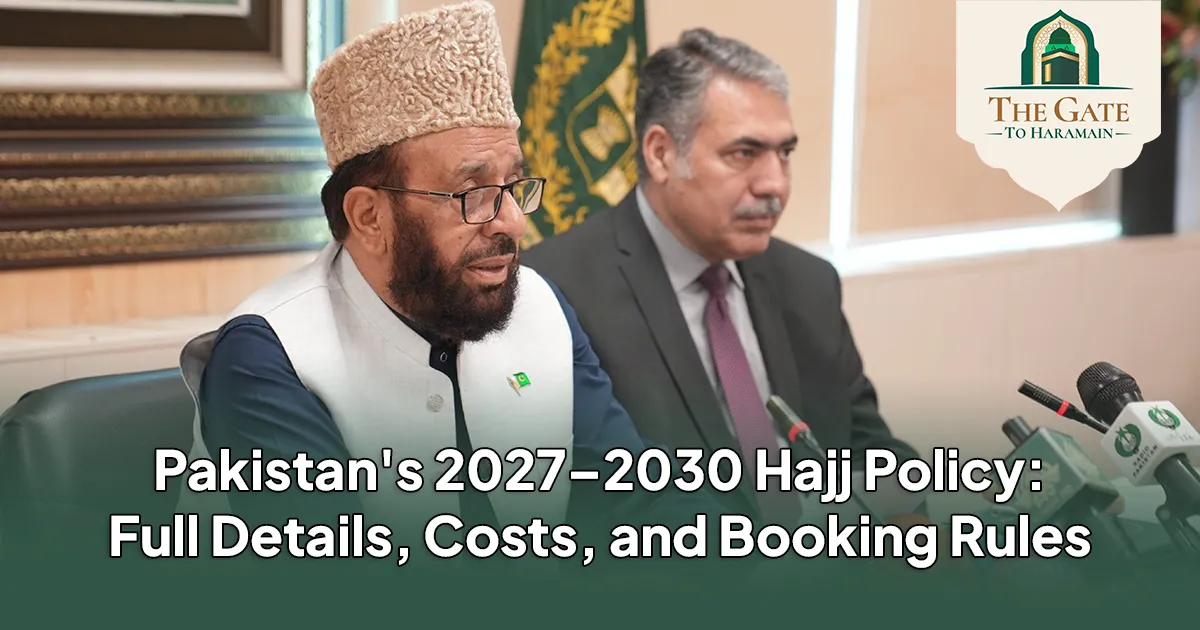
Pakistan’s Hajj Policy 2027–2030 is the country’s first multi-year Hajj framework, announced by Religious Affairs Minister Sardar Muhammad Yousaf on Wednesday in Islamabad. It replaces the previous system of approving a new Hajj policy every year, and lets pilgrims register for any Hajj season through 2030 by paying 10% of the estimated cost upfront.
“This policy is based on transparency, merit, digital governance, responsiveness and the success of participants,” Yousaf said at the press conference, adding that it marks the start of lasting reforms in Hajj arrangements, not just a one-year plan.
How Registration Works
- Register anytime through 2030. Pilgrims are no longer limited to a single annual application window.
- Pay 10% upfront. This deposit secures a spot for the pilgrim’s chosen year.
- Select a preferred year. Applicants choose which Hajj season (2027–2030) they want.
- Join the digital waiting list. Placement runs first-come, first-served through a transparent digital system.
- Roll over automatically if full. If a chosen year is oversubscribed, the applicant moves to the next available year.
Multi-Year Contracts Aim to Cut Costs
A new element in this rewrite: the ministry will sign three-to-four-year contracts for accommodation, transport, catering, air travel, and cargo services rather than negotiating annually. Officials say locking in longer contracts is expected to improve service quality while lowering costs, since vendors gain contract certainty across multiple Hajj seasons.
Government Steps Back to a Regulatory Role
The ministry says it will gradually shift from directly managing Hajj operations to acting as regulator, monitor, and quality assurer, with private-sector involvement increasing correspondingly. This reframes the 60:40 government-private quota split (unchanged for 2027–2030 unless revised by the federal cabinet) as part of a longer-term handover rather than a fixed allocation.
Quota Numbers: 2026 vs. the New Policy
|
Metric |
2026 Pilgrimage |
2027–2030 Policy |
|---|---|---|
|
Total quota |
179,210 pilgrims |
60:40 govt-private split (total TBD per year) |
|
Government scheme |
119,210 pilgrims |
60% |
|
Private scheme |
60,000 pilgrims |
40% |
|
Registration cycle |
Annual |
Multi-year, continuous |
Private Operators Move to a Digital Portal
All private Hajj companies must now conduct bookings, payments, monitoring, and audits through the Private Hajj Management Portal (PHMP). Registration and continued operation depend on service performance and compliance with prescribed standards — not automatic quota allocation. All Hajj payments, government and private alike, must go through government-designated banking channels.
Refunds, Audits, and Complaints
Any unspent portion of a pilgrim’s Hajj payment is refunded after the pilgrimage concludes. An independent third party will review both government and private Hajj arrangements. A new digital complaint management system, paired with a formal appeals process, is intended to speed up resolution of pilgrim complaints.
Training and Emergency Support
Pilgrim training will now cover Hajj rituals, mobile applications, health guidance, emergency management, and Saudi law. Hajj assistants (Moavineen) will be selected through merit-based criteria set by a Cabinet Committee. The existing Hajj Muafiz Scheme continues, providing financial assistance in cases of death, accidents, or emergency evacuation — backed by a new emergency management system and a dedicated emergency response team.
Also read: Pakistan Fast-Tracks Passport Renewals for Hajj 2027 Pilgrims
Frequently Asked Questions
Can I book my Hajj seat for a specific year under the 2027–2030 policy?
Yes. Pilgrims choose their preferred year at registration. If that year’s quota is full, they’re automatically placed on the waitlist for the next available year.
How much do I need to pay to reserve a Hajj seat?
10% of the total package cost is paid in advance. The remaining balance is due before departure.
How much does Hajj cost in Pakistan under this policy?
An estimated PKR 1.2 million for the Long Hajj package and PKR 1.3 million for the Short Hajj package, according to the Ministry of Religious Affairs.
Do pilgrims get refunds if they don’t use all the paid services?
Yes. After each Hajj season, the ministry compares services used against payment made and refunds the difference. Independent auditors review this process.
Are private Hajj companies still allowed to operate?
Only if they meet service standards. Quotas are no longer automatic, and three companies have already been banned for pilgrim mistreatment.
What is the government-private quota split?
60% government scheme, 40% private scheme, for 2027 through 2030, unless the federal cabinet revises it.
What is Pakistan’s Hajj Policy 2027–2030?
It’s Pakistan’s first four-year Hajj framework, replacing annual policy approval, that allows multi-year pilgrim registration, expands the private sector’s role, and digitizes Hajj administration end-to-end.
How do I register under the new multi-year system?
Pay 10% of the estimated cost upfront, select a preferred Hajj year through 2030, and join the digital first-come, first-served waiting list.
What is the Private Hajj Management Portal (PHMP)?
A mandatory digital system through which private Hajj operators handle bookings, payments, monitoring, and audits.
What is the Hajj Muafiz Scheme?
A financial assistance program covering death, accidents, or emergency evacuation during Hajj, continued under the new policy.
Will unspent Hajj payments be refunded?
Yes. Any leftover amount from a pilgrim’s Hajj dues is refunded after the pilgrimage is complete.