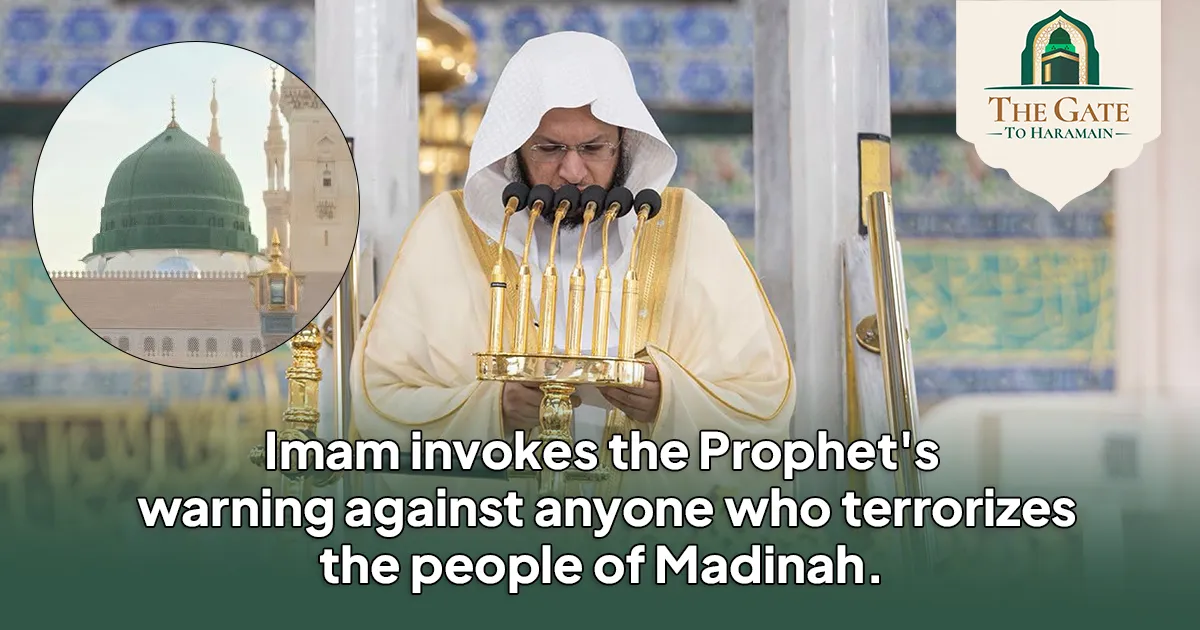
Do Not Terrorize the People of Madinah – Prophet’s Mosque Friday Sermon 18 September 2026 (6 Rabi ul Akhir 1448 AH)
Why Does Allah Give Some People Wealth and Others Poverty?
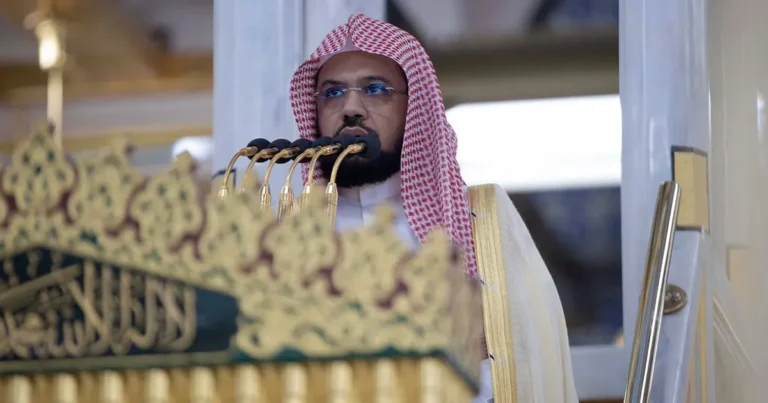
Look around any Friday prayer line, and you will see the whole spectrum. Men in tailored thobes standing shoulder to shoulder with men who own one pair of shoes. Nobody’s rank changes at the front of that line. That’s the starting point. Sheikh Dr. Abdul-Muhsin Al-Qasim, Imam and preacher of the Masjid An Nabawi Mosque, took this week, and the answer he gave cuts against almost everything the world teaches about money.
The Design Behind the Difference
Some people have more. Some have less. That is not an accident, and it is not a flaw in the system… It is the system.
Sheikh Mohsin Al-Qasim explained that Allah built variation into human life on purpose: differences in intellect, in temperament, in livelihood, in what people are given and what they are not. Without that gap, nobody would need anybody else. He cited the ayah:
“We have apportioned among them their livelihood in the life of this world and raised some of them above others in degrees, so that they may take one another in service.” (Surah Az-Zukhruf, 43:32)
Think about what disappears if that gap closes. Charity disappears; there’s no one left to give to. Gratitude disappears nothing left to be thankful for over someone else. The entire architecture of mutual need, the thing that actually holds a society together, only works because people don’t have identical circumstances.
And there’s a second reason, one that’s easy to miss: too much is dangerous. The sermon points to another ayah.
“And if Allah had extended provision for His servants, they would have committed tyranny on the earth.” (Surah Ash-Shura, 42:27)
Unlimited abundance doesn’t make people grateful. It makes them reckless. Allah gives by measure, the sermon says, because He knows exactly what each person can carry without it ruining them.
Wealth and Poverty Are Both a Test — Not a Verdict
Here’s where the sermon gets uncomfortable, in a good way.
It’s tempting to read wealth as a sign of Allah’s approval and poverty as a sign of His displeasure. The sermon rejects that outright. Abundance is not proof of love. Scarcity is not proof of anger. Sometimes the exact opposite is true — a person can be handed everything they want, and it’s actually istidraj, a gradual entrapment, being let further from the truth by being given more rope. And a person can have very little precisely because that little is protecting them from ruin.
The Prophet ﷺ said it plainly: “Whomever Allah intends good for, He afflicts him with trials” (Sahih Bukhari). Trial isn’t the opposite of being loved. Sometimes it’s the evidence of it.
The sermon backs this up with names, not abstractions, because that’s the difference between a claim and a demonstrated pattern:
- Wealthy prophets: Ibrahim, Ayyub, Dawud, Sulaiman.
- Wealthy companions among the ten promised Paradise: Uthman ibn Affan, Abdur-Rahman ibn Awf, Talhah ibn Ubaydullah, Al-Zubayr ibn Al-Awwam.
- Poor prophets: Isa ibn Maryam, Yahya.
- Poor companions: Abu Dharr Al-Ghifari, Mus’ab ibn Umayr, Salman Al-Farsi.
- Those who lived both: the Prophet Muhammad ﷺ himself, Abu Bakr, Umar ibn Al-Khattab.
Righteousness shows up on both sides of the ledger. Money was never the scoreboard. “Indeed, the most noble of you in the sight of Allah is the most righteous of you” (Surah Al-Hujurat, 49:13) — that’s the only ranking that actually counts.
Two States, One Believer
A believer lives between two responses, the sermon says: gratitude when things are easy, patience when they’re not. Nobody gets to pick one and skip the other.
The Prophet ﷺ held both at once, and held them completely: the most grateful man alive during blessing, the most patient man alive during affliction. Ibn Rajab described it this way: the Prophet ﷺ gave away gifts that Khosrow and Caesar, the wealthiest kings of the age, couldn’t have matched — while living, day to day, like the poorest man in Madinah.
And that poverty wasn’t theoretical. The sermon lists it out: the Prophet ﷺ tying a stone against his stomach to blunt the hunger. Abu Bakr and Umar, on separate nights, each driven out of their homes by hunger alone — only to run into the Prophet ﷺ outside, who’d been pushed out by the same thing. Abu Hurairah collapsing from starvation between the pulpit and Aisha’s chamber, and people stepping over him, assuming he’d simply lost his mind — not realizing he’d simply lost his strength.
“By Allah, it is not poverty that I fear for you” (Sahih Bukhari and Muslim), the Prophet ﷺ said. Poverty was never the thing to dread.
The Real Danger Is the Opposite One
So what did he fear? Comfort.
“I fear that the world will be spread out before you as it was spread before those before you, and you will compete for it as they competed for it, and it will destroy you as it destroyed them.” (Sahih Bukhari and Muslim)
That’s the warning the sermon spends the most time on, and it’s worth sitting with. Not scarcity, abundance. The distraction of having enough to chase more.
There’s a number attached to this that stops people mid-scroll: the poor among the believers, the sermon says, will enter Paradise 500 years before the wealthy (Sunan At-Tirmidhi). Not because poverty is a virtue in itself, but because the poor carry a lighter account. Less wealth means less to be questioned about — where it came from, where it went. They’re also, simply, in more urgent need of what they were denied here.
That doesn’t flip the equation entirely, though. A wealthy person who stays righteous, who fears Allah and puts that wealth into charity and good, can outrank someone poorer — because of the good deeds the wealth made possible. The lesson isn’t “poverty wins.” It’s that wealth is a much heavier weight to carry honestly.
The Prophet ﷺ gave the practical antidote to all of this: “Look at those who are below you, and do not look at those who are above you, for it is more suitable that you do not underestimate Allah’s favor upon you” (Sahih Muslim). Contentment, not accumulation, is what actually makes a person rich.
Earn It Yourself
In the second sermon, Sheikh Al-Qasim turned to something practical: work. Islam doesn’t romanticize poverty or wait passively for provision — it commands effort. “No one has ever eaten better food than that which he eats from the work of his own hand” (Sahih Bukhari). Wealth and poverty are both apportioned by what benefits the specific person carrying them, but the earning itself is still an obligation, not optional.
A Closing Word on Makkah and Madinah
The sermon ended where these khutbahs from the Prophet’s Mosque often do on the sanctity of the two holy cities. Makkah holds the Kaaba, the Qiblah, and the sacred sites of Safa, Marwah, and Arafat. Madinah holds the Prophet’s ﷺ Hijrah, his mosque, and his resting place described in the sermon as the “haven of faith.”
Sheikh Al-Qasim condemned, in direct terms, the ongoing attacks by the Houthi militia against these sanctuaries, their educational institutions, mosques, and residents. He invoked the fate of Abrahah’s army, the Companions of the Elephant, as history’s answer to anyone who threatens these cities, and closed with the Prophet’s ﷺ own warning:
“Whoever terrifies the people of Madinah unjustly, Allah will terrify him, and upon him is the curse of Allah, the angels, and all people, and neither obligatory nor voluntary worship will be accepted from him.” (Sunan An-Nasa’i)
The khutbah closed, and the imam led the Friday prayer, reciting Surah At-Tin and Surah Az-Zalzalah.