“Condition After Condition”: The Verse That Reframes Every Hardship – Masjid An Nabawi Friday Sermon 21 August 2026 (8 Rabi’ al-Awwal 1448 AH)
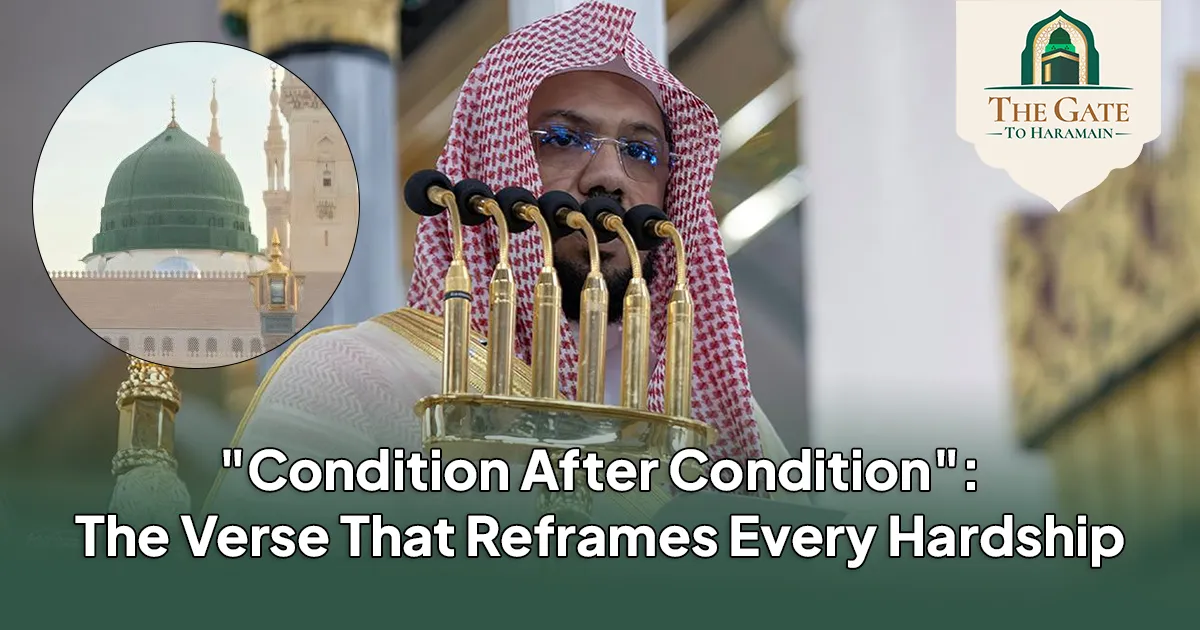
Everyone complains about the heat. You step outside, the sun hits like a wall, and the first thought is, when does this end? Fair enough; it is a normal reaction from a person. But a recent Friday sermon on 21 August 2026 from the pulpit of the Prophet’s Mosque (Al-Masjid an-Nabawi) in Madinah took that same complaint and turned it into something worth sitting with.
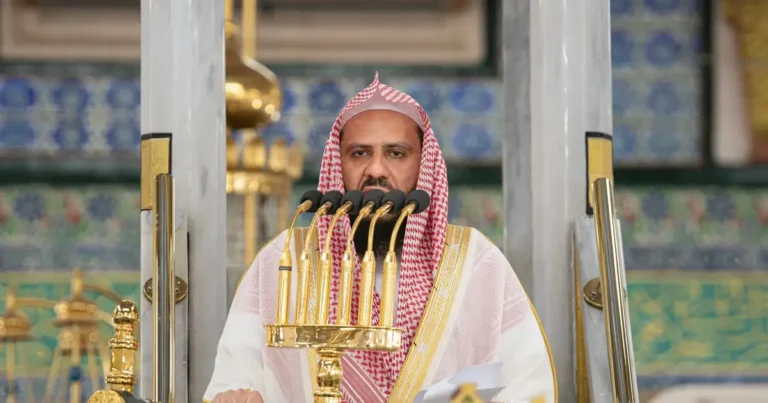
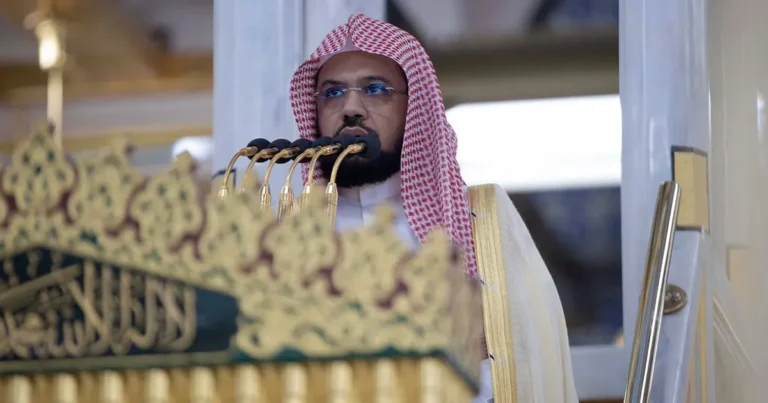
His Eminence Sheikh Ahmed bin Ali Al-Hudhaifi did not tell the congregation to stop noticing the heat. He told them to notice it differently. What follows is what stood out from that sermon and why a weather complaint turned out to be a decent entry point into some of the old questions people ask themselves.
The Heat Is not Random. That’s the Argument.
Start here: The Friday sermon’s opening move is that the scorching midday sun, the blazing air, and the sheer discomfort of summer are none of it is meaningless weather. It is presented as a sign. Ayat, in the Quranic sense, the evidence points back to a designer.
The reasoning is almost mathematical. Seasons rotate. Day follows night on schedule, every time, without fail. The sermon leans on a set of verses from Surah Al-Qasas that ask a pointed rhetorical question: if God made the night permanent, who else could bring back the light? If He made the day permanent, who else could bring back the rest of the night?
Nobody, obviously. That’s the point. Order itself is the argument, and if something holds that kind of authority over the physical world, the sermon argues, it’s the only thing that deserves to be worshipped.
It is a hard case to argue with once you sit on it. We don’t usually think about the fact that the sun rising tomorrow is not actually guaranteed by physics in some cold, self-sufficient way; in this framing, it’s guaranteed by something else entirely.
Nothing Stays the Same. That’s Also the Point.
Here’s where the Friday sermon at Masjid An Nabawi gets more personal. Heat fades into cold. Cold fades back into heat. And the sermon draws a straight line from that cycle to something almost everyone has felt: the sense that good periods in life don’t stay good forever, and bad ones don’t stay bad forever either.
The image used is agricultural: From Surah Al-Hadid, rain falls, crops grow lush and green, and for a moment everything looks abundant. Then it dries out. Turns yellow. Crumbles into debris. Anyone who’s watched a good season and knows the shape of that story even without the farming metaphor.
There’s a specific phrase from Surah Al-Inshiqaq that the sermon spends real time on: humanity will “surely embark upon state after state.” The companion Ibn Abbas is quoted as explaining what that actually means: halan ba’da hal, condition after condition. Not one fixed state. A sequence.
That’s a small linguistic detail, but it does a lot of work. It reframes suffering as something with a shape and a direction rather than something stuck. If your life right now feels like a heatwave, the promise embedded in that phrase is that heatwaves, by definition, don’t stay.
The Comfort Trap (And Why the Sermon Goes to War for It)
This is the section that actually stings a little. The Friday Sermon is named after something most people recognize but rarely say out loud: Heat makes you lazy. Not just physically but spiritually. You skip the extra prayer, put off the good deed, tell yourself you will do it when the weather becomes cooler, when it is easier, when conditions improve.
To make the point on land, the sermon reaches back to the Expedition of Tabuk, a campaign that took place during the brutal summer heat. Some of the hypocrites of that era refused to go, and told others, plainly, “Do not go forth in the heat.” Not a complicated excuse. Just discomfort is winning.
The response those men got, quoted from Surah At-Tawbah, is blunt: “The fire of Hell is more intense than the heat if they only understand.” It’s not subtle, and it is not meant to be. The sermon is making a calculation, and it wants you to make it to: weigh a few uncomfortable hours against something permanent, and see which one actually deserves to dictate your choices.
Honestly, this is the part of the sermon that’s hard to argue with and easy to ignore in practice. Everyone nods along to “Don’t let comfort run your life” until the AC kicks in.
Which Brings Up the AC
The second half of the sermon takes an unexpected turn into modern air conditioning. Not as a throwaway joke, but as a genuine theological point. The sermon frames HVAC systems as a real, tangible blessing that earlier generations simply didn’t have, and argues that walking into a cool room without a moment of gratitude is its own quiet form of heedlessness.
It draws on Surah An-Nahl, which describes homes as shelters, shade, and garments that protect from the elements, closing with the line that God “completes His favour upon you that you might submit.”
This one lands differently depending on where you live. If you have ever been somewhere where the power goes out mid-summer, you already know exactly what this section is talking about. Comfort is invisible until it’s gone.
The Takeaway That Isn’t a Neat Bow
The sermon closes with prayers for the Muslim community broadly, and for Saudi Arabia specifically as the location of the two holy sites, for leadership, and for relief from hardship wherever it’s found. Then the Friday prayer itself continues the theme: the Imam recited Surah Al-Duha in the first rak’ah, which opens with the morning light and the covering of night, and closes with the promise that what comes after is better than what came before.
None of this is really a productivity tip. It’s not “five ways to beat the heat.” It’s closer to a reframe: discomfort is not proof that something’s wrong. Sometimes it’s just weather, doing what weather has always done, on schedule, the same way it did last year and the year before that.
The line worth carrying out from this one: Taqwa, Piety, God-consciousness is described in the sermon as the best thing you can conceal, the most beautiful thing you can display, and the most valuable thing you can store up. Everything else in the sermon is, in a sense, in service to that one idea. The heat passes. What you did while it was hot doesn’t.