
Hajjathon 4: Umm Al-Qura University Opens Applications for Its Flagship Hajj Innovation Competition
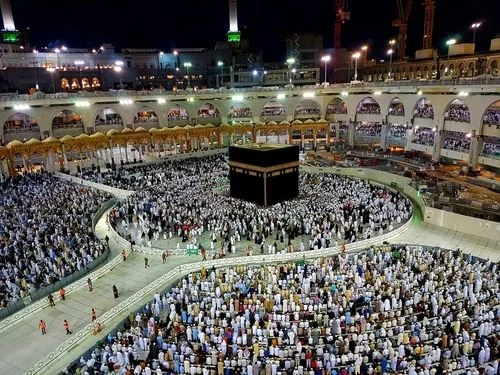
Every year, the logistical demands of Hajj push the limits of what any system, human or digital, can manage. Around 2 million hajis converge on Makkah within days, moving through narrow corridors, sleeping in temporary cities, requiring medical attention, crowd monitoring, and seamless transportation across multiple holy sites.
It is one of the most complex recurring events on earth. And for the fourth consecutive year, Umm Al-Qura University is asking innovators, engineers, developers, and researchers to help solve it.
Hajjathon is back for its fourth year, reflecting a proud tradition of innovation that makes a real difference in pilgrims’ lives. The Custodian of the Two Holy Mosques Institute for Hajj and Umrah Research has opened applications for its annual innovation competition, which is built specifically to produce real, deployable solutions for Hajj and Umrah operations, not polished slide decks that collect dust.
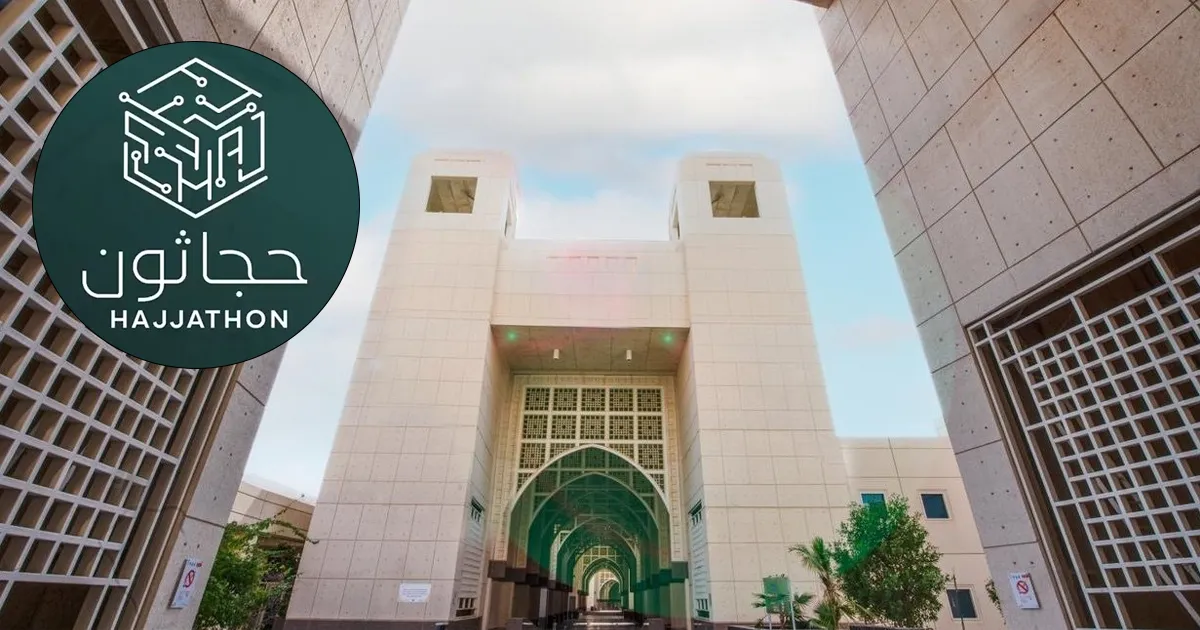
This edition runs alongside the 26th Scientific Forum for Hajj, Umrah, and Visit Research, which will take place from 2 September to 3 September 2026. The venue of this Event is King Abdulaziz Historical Hall on Umm Al-Qura University’s Al-Abidiyah campus in Makkah.
What Is Hajjathon?
Hajjathon is not a traditional hackathon. It operates within the framework of one of the Arab world’s most established academic forums on Hajj research, offering participants opportunities to showcase their innovations to sector leaders, gain recognition, and potentially see their solutions deployed at the holy sites. Participants will also benefit from networking with experts, access to mentorship, and exposure to funding opportunities, making their involvement a valuable step toward impactful contributions.
Since its first edition, the competition has aimed to close the gap between academic Research and operational implementation, offering participants a chance to create solutions that truly impact pilgrims’ experiences. Past editions produced proposals touching on digital queuing systems, crowd density monitoring tools, AI-powered health triage, and mobile platforms for pilgrim guidance. Hajjathon 4 continues in that direction, with a sharper focus on artificial intelligence, IoT integration, and data-driven decision-making.
Four Tracks, Four Problem Areas
Participants in Hajjathon 4 compete under one of four designated tracks, each addressing a distinct layer of the Hajj and Umrah operational system:
- Engineering and Infrastructure: This track targets the physical backbone of the holy sites: transportation corridors, accommodation design, site accessibility, and the structural systems that support millions of simultaneous visitors. Teams here might work on smart facility management, energy efficiency in tent cities, or route optimization for pedestrian flow.
- Technology and Artificial Intelligence: The broadest track in scope, this one covers AI-driven services, data platforms, digital guidance tools, and any technology that can improve how pilgrims navigate the Hajj experience. Given the university’s stated interest in IoT and data analytics, this track will likely attract the largest pool of applicants.
- Healthcare: Hajj places enormous strain on health systems. Heat exhaustion, chronic illness management, emergency response, and language barriers in medical settings are ongoing challenges. Healthcare-focused teams can propose digital health monitoring tools, telemedicine applications, or AI-assisted triage systems tailored to Hajj conditions.
- Awareness and Crowd Management: Crowd safety is a recurring concern at Hajj, where mass movement in confined spaces carries real risk. This track invites solutions that improve situational awareness, pilgrim communication, emergency evacuation planning, and real-time crowd density monitoring using sensor networks or computer vision.
Running Alongside the 26th Scientific Forum
Hajjathon 4 does not run in isolation. It is one part of a larger convening, the 26th Scientific Forum for Hajj, Umrah, and Visit Research, organized under the patronage of Custodian of the Two Holy Mosques King Salman bin Abdulaziz Al Saud. The forum brings together researchers, academics, and sector specialists to present studies, debate developments, and chart directions for how Saudi Arabia continues to develop its Hajj and Umrah infrastructure.
A scientific exhibition runs alongside the forum, showcasing initiatives, technologies, and innovations from various entities involved in the pilgrimage ecosystem. For Hajjathon participants, the forum setting matters: it places their work in front of researchers, ministry representatives, and institutional decision-makers who have the authority to take ideas forward.
University President Prof. Moaddi bin Muhammad Aal Madhab noted that the royal patronage reflects the Saudi leadership’s commitment to supporting scientific Research and harnessing its outcomes in the service of the guests of God. He tied the forum’s goals directly to Vision 2030 and the Pilgrim Experience Program — the national initiative driving improvements across Hajj, Umrah, and visit services, inspiring participants to contribute to a shared national vision.
Umm Al-Qura’s Growing Role in Hajj Innovation
Hajjathon 4 reflects a broader institutional shift at Umm Al-Qura University. Over the past several years, the university has positioned itself not just as an academic institution but as an active participant in the development of Saudi Arabia’s Hajj and Umrah ecosystem. Graduate programs have expanded into specialized fields related to pilgrimage management, and the university’s research institute continues to publish work that informs operational decisions at the holy sites.
Earlier in 2026, the university co-organized the third Historical Sites Hackathon with the Ministry of Hajj and Umrah, drawing around 300 applicants and 40 projects from more than 32 countries. In November 2025, it ran the Humanizing the Holy Sites Hackathon as part of the fifth Hajj Conference and Exhibition in Jeddah. These are not isolated events — they are part of a deliberate, continuous effort to build a pipeline from innovation to implementation.
The institute’s 2026 multilingual digital project — which uses interactive media to introduce pilgrims to the Kingdom’s Islamic, historical, and cultural sites — is one example of how research outputs eventually become deployed services. Hajjathon is designed to feed that same pipeline.
Why This Matters for Pilgrims of Hajj and Umrah
The improvements that come out of these competitions and forums are not abstract. When a team develops a better crowd monitoring system for Mina or a smarter health screening tool at the Masjid Al-Haram entrances, those solutions have direct consequences for pilgrims performing one of the most spiritually significant acts of their lives.
Pilgrims from Pakistan, Indonesia, Turkey, Nigeria, and dozens of other countries arrive speaking different languages, carrying different health conditions, and navigating an environment that is simultaneously sacred and logistically overwhelming. Technology that accounts for that complexity — not technology built for ideal conditions — is what Hajjathon is trying to find.
One recent example of this kind of work is the Salek Al-Mashaer platform developed by Al-Amad, a Saudi startup that debuted at the Umrah and Visit Forum 2026. The virtual reality training system allows pilgrims to rehearse movement between the holy sites before they arrive, covering emergency scenarios and crowd navigation in a simulated environment that mirrors the actual sites. It supports Arabic, English, and Urdu, and includes features for deaf users. That is the kind of practical, community-aware solution Hajjathon looks to produce.
How to Apply
Applications for Hajjathon 4 are open now through Umm Al-Qura University’s official portal. The competition is open to students, researchers, developers, entrepreneurs, and multidisciplinary teams across all four tracks.
Apply and find full details at: https://uqu.edu.sa/ccpa/153702
The 26th Scientific Forum and Hajjathon 4 take place September 2-3, 2026, at King Abdulaziz Historical Hall, Al-Abidiyah campus, Makkah.
Hajjathon 4 is open. Umm Al-Qura University's Hajj & Umrah Research Institute wants engineers, developers, and researchers to build real solutions for one of the world's most complex events. Four tracks. September 2026. Makkah.
— The Gate To Haramain (@GateToHaramain) June 29, 2026
Applications are open now: https://t.co/kaIb3qsy1l pic.twitter.com/x199O6Gbis