“The One Who Never Dies” Masjid ul Haram Friday Sermon 17 July 2026 (3/2/1448 AH)
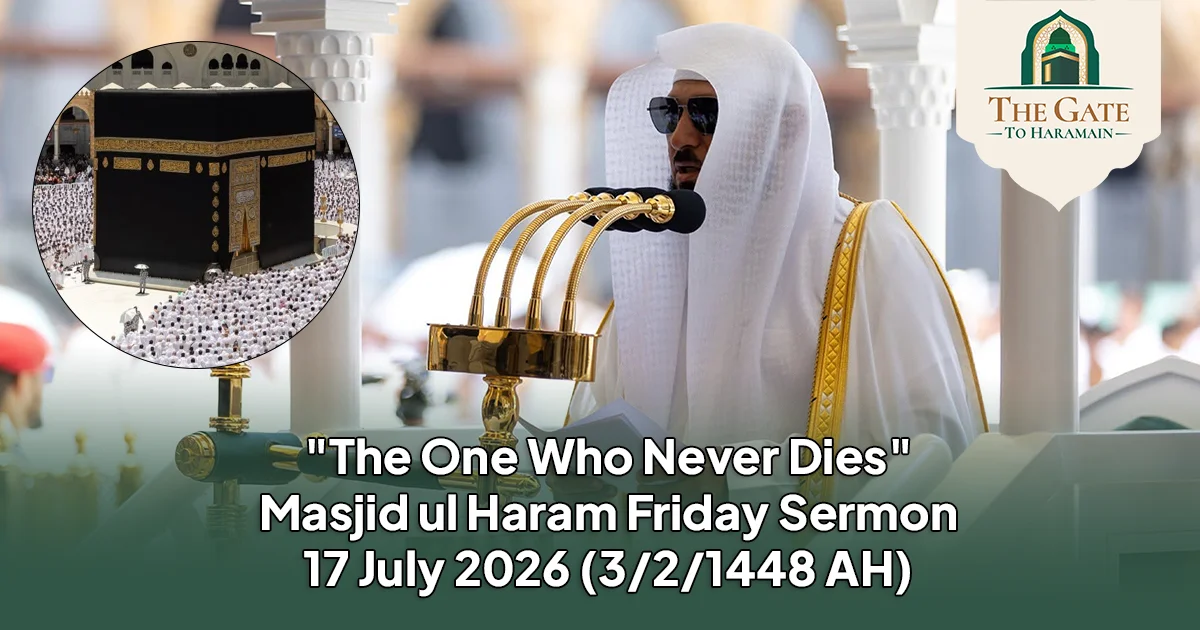
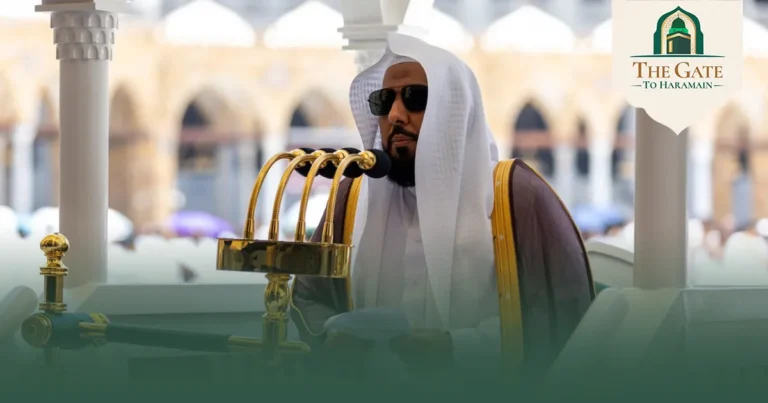
Today, on 17 July 2026, Friday khutbah and prayer at the Grand Mosque were led by His Eminence Sheikh Prof. Dr. Maher bin Hamad Al-Muaiqly, Imam and preacher of the Masjid al-Haram.
Sheikh Maher opened with the standard reminders about fear of Allah, be sincere in intention, hold to the Sunnah, work good deeds, stay clear of sin before turning to the sermon’s real subject: the names and attributes of Allah. Knowledge of them, he said, is the noblest and most beneficial branch of knowledge there is, simply because nothing outranks its subject. The more a servant learns his Lord’s names and attributes, the more he knows Him. And knowing Him is what produces fear of Him, hope in Him, and closeness to Him.
Al-Hayy: The Living (الحَيّ)
The name Al-Hayy (الحَيّ) indicates a life that is full, perfect, perpetual, and complete in every sense, not having been preceded by non-existence. It will not be followed by non-existence, never being affected by exhaustion. That kind of life demands perfection in every other attribute: knowledge, power, hearing, sight, forgiveness, mercy. Every created thing dies. Allah alone does not.
Sheikh Al-Muaiqly cited: “And rely upon the Ever-Living who does not die” (Quran 25:58), and “Everyone upon the earth will perish, and there will remain the Face of your Lord, Owner of Majesty and Honor” (Quran 55:26-27).
He also recalled how Hazrat Abu Bakar Siddique, may Allah be pleased with him, responded when the Prophet ﷺ died, grounding the community’s grief in the verse: “Muhammad is but a messenger; other messengers have passed away before him.”
Al-Qayyum: The Sustainer (ٱلْقَيُّومُ)
Al-Qayyum (ٱلْقَيُّومُ) is Allah’s self-sufficiency and His command over everything He created. Creation depends on Him; He depends on nothing. The Prophet ﷺ said as much in his night prayer: “O Allah, to You belongs all praise. You are the Sustainer of the heavens and the earth and all that is in them.”
What does that sustaining look like in practice? He withholds, and He gives. He brings life and brings death. He honors, He humbles, He guides, He lets go astray. He relieves distress, aids the afflicted, heals the sick, answers the one who calls on Him, accepts repentance, and mends what’s broken. Every soul answers to Him for what it has earned — He knows their words and deeds, and He will judge and reward accordingly on the Day of Resurrection.
Sheikh Maher Al-Muaiqly pointed to Ayat al-Kursi as the clearest statement of all this: “Allah… there is no deity except Him, the Living, the Sustainer of [all] existence. Neither drowsiness overtakes Him nor sleep. To Him belongs whatever is in the heavens and whatever is on the earth.” The verse carries the full weight of a life with no beginning or end, a dominion with no edges, a knowledge with no gaps, an authority that nothing can rival. Preserving the heavens and the earth costs Him nothing. He is the Most High, the Most Great.
Also read: “When Allah Walks With You, Every Hardship Gets Lighter” Masjid ul Haram Friday Sermon 10 July 2026
What This Means for a Believer
If a believer is certain, really certain, that Allah is alive and does not die, and that He alone sustains and governs the heavens and the earth, that certainty changes how he lives. He relies on Allah sincerely. He trusts Him. He accepts His decree and stays patient through the trial. He hopes for nothing and desires nothing except what comes from Him. He remembers Him more, especially when trouble hits the way the Prophet ﷺ did, saying: “O Living, O Sustainer, by Your mercy I seek help.”
Sheikh Al-Muaiqly also recalled how Hazrat Ali bin Abi Talib, may Allah be pleased with him, narrated the Prophet’s ﷺ supplication on the day of Badar.
Sheikh Maher closed by urging the congregation to hold on to the dua the Prophet ﷺ recited every morning and evening: “O Ever-Living, O Self-Sustaining, by Your mercy I seek help. Set right all my affairs and do not leave me to myself for even the blink of an eye.” Calling on Allah by these two names, he said, relieves distress, draws down blessing, and expiates sin.
Kaabah Imam also encouraged frequent istighfar, citing: “I seek forgiveness from Allah, besides Whom there is no deity worthy of worship, the Ever-Living, the Self-Sustaining, and I repent to Him.”