Tawheed as a Way of Life: Masjid Al Haram Friday Sermon 13 Nov 2026 (13 Jumada al-Akhirah 1448 AH)
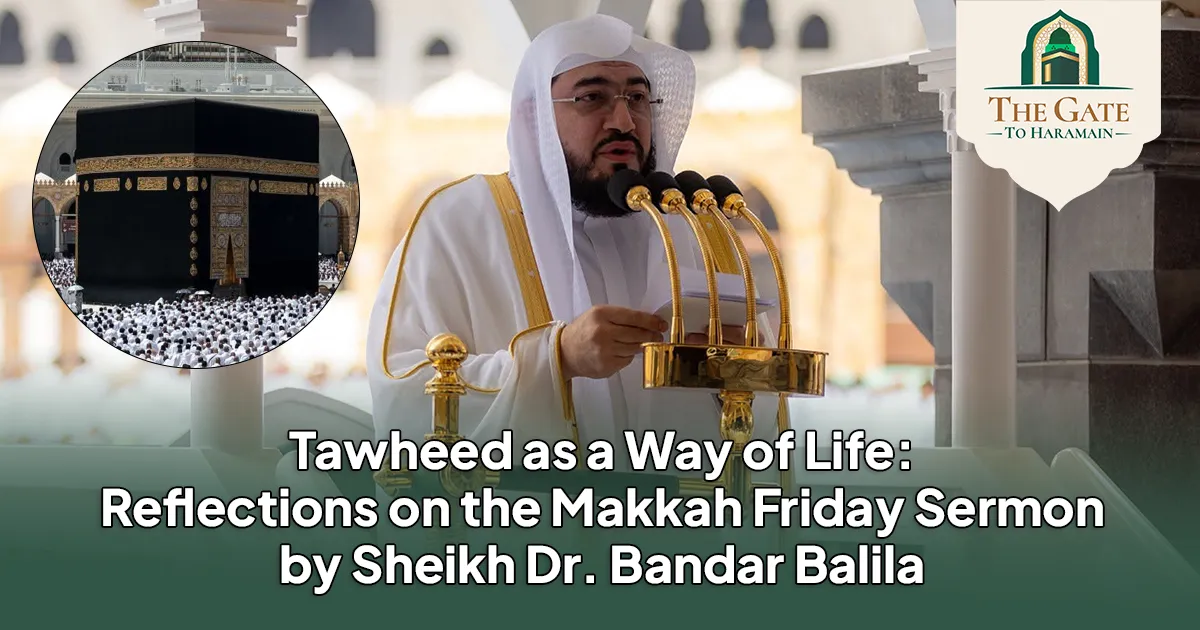
For Muslims preparing to visit Makkah or seeking spiritual guidance from the Sacred Mosque, the weekly Friday sermon (khutbah) from Masjid al-Haram offers timeless reminders rooted in the Qur’an and Sunnah.
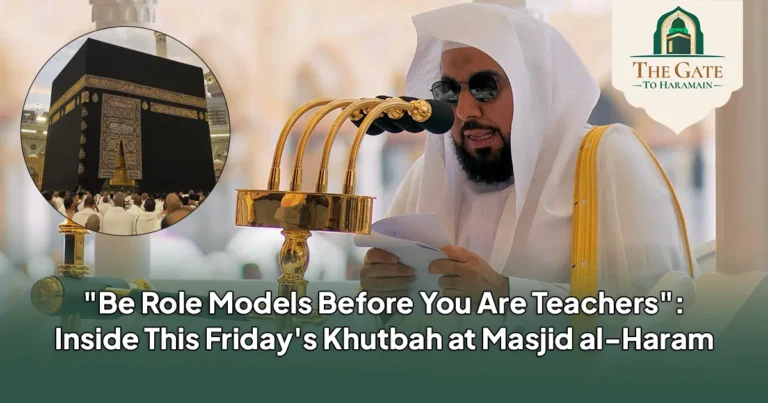
On Friday, 3 Jumada al-Akhirah 1448 AH, His Eminence Sheikh Dr. Bandar bin Abdulaziz Balila delivered a sermon from the pulpit of the Grand Mosque in Makkah centered on Tawheed, the pure monotheistic worship of Allah.
Rather than presenting monotheism as a purely theoretical concept, Sheikh Dr. Bandar Balila explained that Tawheed is humanity’s greatest blessing, the reason for human existence, and a practical way of life that shapes everyday speech, ethics, and relationships.
The Greatest Blessing Bestowed on Humanity
Sheikh Dr. Bandar Balila began by reminding the congregation of human origins. Allah created humankind from nothingness, as reflected in the Qur’an: “Has there [not] come upon man a period of time when he was not a thing even mentioned?” (Surah Al-Insan, 76:1). From that state of non-existence, Allah sustained humanity with countless worldly provisions, including rain, fertile earth, navigable seas, and the steady cycles of day and night.
Yet the khateeb emphasized that physical provisions, essential as they are for daily survival, cannot compare to the spiritual gift of faith. He noted that the highest blessing Allah has granted humanity is the blessing of Islam, Tawheed, and the testimony of faith: La Ilaha Illa Allah (There is no true deity worthy of worship except Allah). Allah grants this guidance out of His grace and bounty, and withholds it out of His justice and wisdom.
To illustrate the unmatched weight of La Ilaha Illa Allah, the sermon recalled a well-known narration concerning Prophet Musa (Moses, peace be upon him). When Prophet Musa asked Allah for a special phrase of remembrance, Allah instructed him to say La Ilaha Illa Allah. When Musa noted that all servants say those words, Allah informed him that if the seven heavens, all their inhabitants other than Him, and the seven earths were placed on one side of a scale, and La Ilaha Illa Allah were placed on the other, the testimony of monotheism would outweigh them all.
Allah’s Right Over Creation and Our Natural Disposition (Fitrah)
In his address, Sheikh Dr. Bandar Balila clarified that Tawheed is not merely a personal preference; it is the foundational right of the Creator over His creation. He cited the authentic hadith of Mu’adh ibn Jabal (may Allah be pleased with him), in which the Prophet Muhammad (peace be upon him) explained that Allah’s right upon His servants is that they worship Him alone without associating any partners with Him, while the servants’ right upon Allah is that He will not punish those who remain free from idolatry.
The khateeb also connected monotheism to al-fitrah, the natural disposition with which every human being is born. Every soul carries an innate inclination to recognize and worship its Creator. For this single purpose, Allah created jinn and humankind, revealed divine scriptures, and sent messengers. As the Qur’an states, “And I did not create the jinn and mankind except to worship Me” (Surah Adh-Dhariyat, 51:56).
Beyond Ritual: Tawheed in Daily Words and Actions
A central theme of the Makkah sermon was correcting the common assumption that monotheism is confined to formal acts of worship such as prayer or fasting. Sheikh Dr. Bandar Balila stressed that Tawheed governs a believer’s spoken words, inner beliefs, daily actions, and social or financial dealings.
Quoting Surah Al-An’am (6:162–163), the khateeb reminded worshippers, “Say: Indeed, my prayer, my sacrifice, my living and my dying are for Allah, Lord of the worlds. No partner has He.” For a Muslim—and especially for a pilgrim preparing to stand before the Ka’bah—living by Tawheed means aligning honesty in business, kindness to family, and sincerity in private life with devotion to Allah alone.
Guarding Against Shirk and Spiritual Complacency
Just as Tawheed is the foundation of all good deeds, associating partners with Allah (shirk) is its direct opposite and the gravest sin in Islam. Sheikh Dr. Bandar Balila warned that shirk destroys the value of a person’s righteous works, citing the Qur’anic warning addressed even to the Prophets: “If you should associate [anything with Allah], your work would surely become worthless, and you would certainly be among the losers” (Surah Az-Zumar, 39:65).
He further clarified a core principle of Islamic belief: no created being—regardless of piety, rank, or spiritual status—possesses independent power to bring benefit or ward off harm without Allah’s permission. Even the Prophet Muhammad (peace be upon him) was instructed to tell people, “Say: I hold not for myself [the power of] benefit or harm, except what Allah has willed” (Surah Al-A’raf, 7:188).
In the second part of the sermon, the khateeb highlighted why believers must never feel immune to spiritual trials. He pointed to Prophet Ibrahim (Abraham, peace be upon him), who broke the idols of his people yet still supplicated: “My Lord, make this city secure and keep me and my sons away from worshipping idols” (Surah Ibrahim, 14:35). Quoting the early scholar Ibrahim al-Taymi—”Who can feel safe from trial after the intimate friend of Allah, Abraham?”—Sheikh Dr. Bandar Balila urged Muslims to protect themselves, their children, and their relatives through ongoing vigilance, sincere supplication, and sound religious education.
Sharing the Message with Wisdom, Mercy, and Humility
Concluding his sermon, Sheikh Dr. Bandar Balila addressed how Muslims should share the beauty of monotheism with non-Muslims. He outlined three clear principles rooted in the Qur’an:
- Wisdom and gracious dialogue: Muslims should present the reality and positive impact of Tawheed with wisdom and good counsel (Surah An-Nahl, 16:125), viewing others with compassion rather than harshness.
- Respectful conduct without provocation: Believers must never insult or mock the deities revered by others, as the Qur’an forbids such behavior lest it provoke hostility and disrespect toward Allah out of ignorance (Surah Al-An’am, 6:108).
- Gratitude rather than pride: A Muslim should never view their faith as a personal achievement or a favor done to Allah. Guidance itself is an unearned gift from Allah, reminding believers to remain humble and thankful.
Practical Takeaways for Readers and Pilgrims
Whether you are planning an upcoming Umrah journey or reflecting on your daily faith at home, the sermon of Sheikh Dr. Bandar Balila offers clear, actionable steps:
- Renew your intention daily: Before performing acts of worship, charity, or everyday work, pause to ensure your actions are sincerely for Allah alone.
- Practice Tawheed in everyday dealings: Apply Islamic ethics in financial transactions, workplace honesty, and family life, recognizing that all aspects of living belong to Allah.
- Supplicate for steadfastness: Follow the example of Prophet Ibrahim (peace be upon him) by regularly asking Allah to keep you and your family firm upon pure monotheism.
- Represent Islam through good character: Let patience, honesty, and respectful speech reflect the beauty of your faith when interacting with neighbors, colleagues, and fellow travelers.
Conclusion
The Friday sermon delivered by Sheikh Dr. Bandar bin Abdulaziz Balila at Masjid al-Haram serves as a clear reminder that Tawheed is both the starting point of Islamic faith and the compass for a Muslim’s entire life. Holding firmly to pure monotheism, guarding against spiritual complacency, and sharing faith with wisdom bring clarity and peace to both daily routines and sacred journeys.
If you are preparing to visit the Sacred Mosque in Makkah and wish to plan your pilgrimage with care and peace of mind, explore our upcoming Umrah guidance resources or reach out to The Gate to Haramain team for assistance with your sacred travel arrangements.
Frequently Asked Questions
Who delivered the Friday sermon at Masjid al-Haram on 3 Jumada al-Akhirah 1448 AH?
The Friday sermon and congregational prayer at the Grand Mosque in Makkah were led by His Eminence Sheikh Dr. Bandar bin Abdulaziz Balila.
What does “Tawheed” mean in simple terms?
Tawheed means believing in and worshipping Allah alone as the sole Creator, Sustainer, and Lord of the universe, without associating any partners with Him in worship, belief, or daily conduct.
Why is understanding Tawheed important before performing Umrah or Hajj?
Umrah and Hajj are built entirely around the sincere worship of Allah alone, echoed in the pilgrim’s Talbiyah (“Labbayk Allahumma labbayk, labbayka la sharika laka “labbayk”—Here I am, O Allah, here I am; You have no partner). Grounding your heart in Tawheed ensures your pilgrimage rituals remain focused on sincerity and prophetic guidance.
How does the sermon advise Muslims to speak about Islam with non-Muslims?
Sheikh Dr. Bandar Balila emphasized presenting Islam with wisdom, good counsel, empathy, and humility, while strictly avoiding insults or mockery toward the beliefs of others.