Hold Yourself to Account First: Prophet’s Mosque Friday Sermon 13 November 2026 3 Jumada al-Akhirah 1448 AH
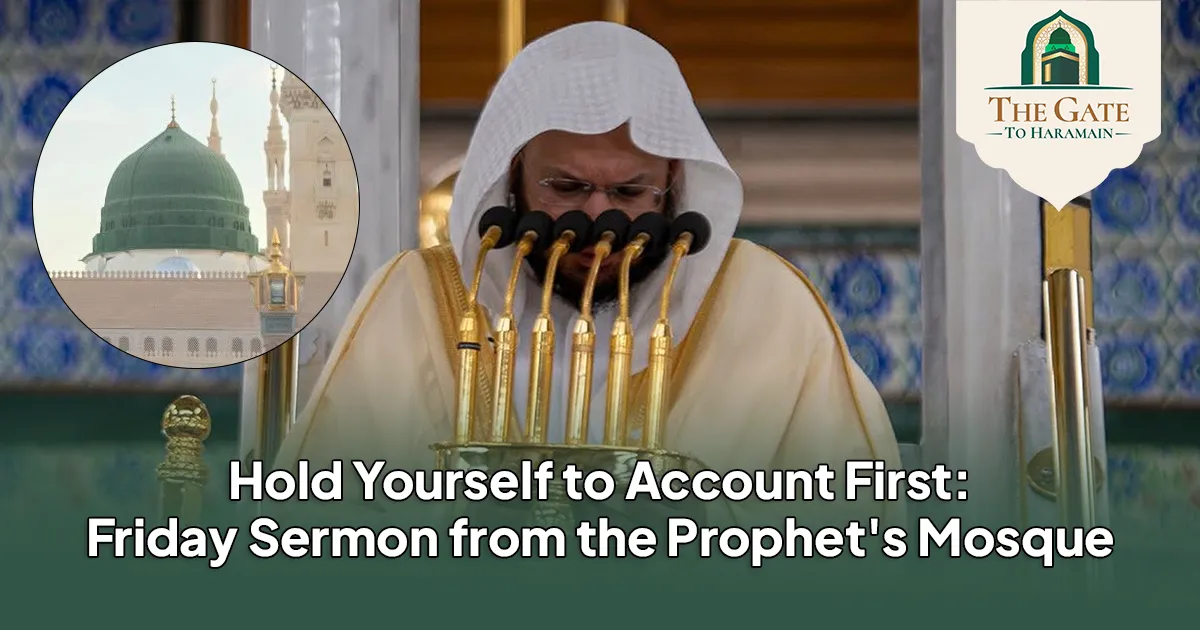
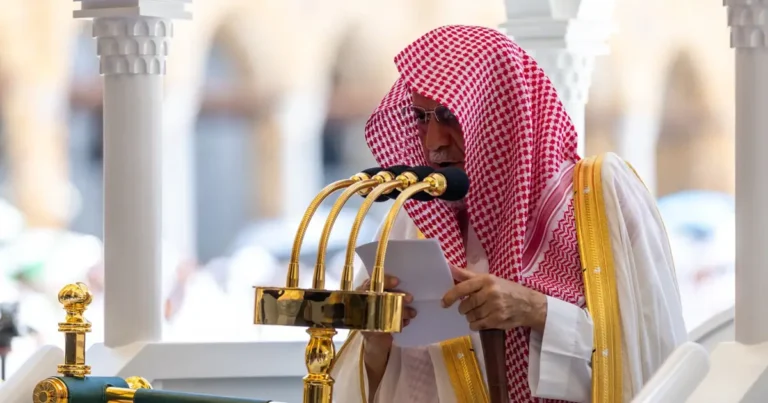
At today’s Friday prayer in Al-Masjid an-Nabawi, Sheikh Dr. Abdul Muhsin Al-Qasim, Imam and Khateeb of the Prophet’s Mosque, spoke about a day every person will face: the Day of Judgment. He took the congregation through the questions waiting in the grave and on the Day of Resurrection. Then he asked them to start a habit now, which is to take stock of yourself before you are taken to account.
| At a glance | |
|---|---|
| Khateeb | Sheikh Dr. Abdul Muhsin Al-Qasim, Imam and Khateeb of the Prophet’s Mosque |
| Place | Al-Masjid an-Nabawi, Madinah |
| Date | Friday, 13 November 2026 (3 Jumada al-Akhirah 1448 AH) |
| Theme | Preparing for the Day of Judgment through faith, good deeds, and self-accountability |
| Core message | This world is a place for action, not reckoning. The Hereafter is a place for reckoning, not action. |
Belief in the Last Day is a pillar, and the grave is the first stop
Sheikh Al-Qasim began with foundations. Religion rests on firm pillars, he said, and belief in the Last Day is one of the great pillars of Islam and faith. He called the grave the first stage of the Hereafter. Paradise or Hell is where a person finally settles, but nobody arrives there directly. There are stages first, and at each one a person is asked what they did.
Two very different moments at death
The Khateeb then described how a believer and a polytheist meet death. For believers, the angels come down with reassurance and good news. He recited the words of Allah: “The angels descend upon them, [saying], ‘Do not fear and do not grieve, but receive good tidings of Paradise, which you were promised.'”
For the polytheists, the angels come with rebuke: “Until, when our messengers come to them to take their souls, they will say, ‘Where are those whom you used to invoke besides Allah?'”
As the soul rises, he explained, the angels rejoice over the believer’s soul and call it a good soul. They call the disbeliever’s soul a wicked one. The soul is then returned to the body in the grave. Two angels come, sit the person up, and ask three questions, as the Prophet Muhammad ﷺ described: “Who is your Lord? What is your religion? Who is this man who was sent to you?”
Even the messengers will be asked
The questioning is not only for ordinary people. Sheikh Al-Qasim reminded worshippers that messengers will be asked whether they delivered their message, and nations will be asked what their messengers conveyed to them.
He cited a hadith narrated by Al-Bukhari. Noah will be called on the Day of Resurrection and will answer, “At Your service, O Lord!” When asked whether he delivered the message, he will say, “Yes.”
What every person will be asked about
Start with worship. It is a right that belongs to Allah alone, the Khateeb said, and every person answers for what they believe and do. Anyone who directs worship to someone other than Allah will be questioned. So will anyone who denies Allah’s signs and rejects the resurrection.
He also warned about those who call people to misguidance and claim they will carry the sins of their followers. He cited the verse: “And they will surely bear their own burdens and other burdens along with their own, and they will surely be questioned on the Day of Resurrection about what they used to invent.”
Then he moved to everyday life, which is where most of us actually live.
Promises and people. Accountability covers covenants, contracts, and the rights of others. Every deal you made and every person you owed something to is part of it.
Those in your care. He cited the Prophet’s ﷺ words: “Each of you is a shepherd, and each of you will be asked about his flock.” That responsibility reaches family, relatives, and anyone whose affairs you look after. It means giving people their rights and doing your duties toward them.
Blessings, big and small. The Khateeb said a person will be asked about the blessings Allah gave them, including the ones we barely notice. He cited the hadith: “The feet of a servant will not move on the Day of Judgment until he is asked about his life and how he spent it, about his knowledge and what he did with it, about his wealth and how he acquired it and how he spent it, and about his body and how he used it.”
The Quran. A person will also be asked about the rights of the Holy Quran: reciting it, reflecting on it, and acting on what it says.
There is mercy in the reckoning too.
The sermon was not only a warning. Sheikh Al-Qasim said the reckoning includes all of creation and that the believer will confess their sins before Allah, who conceals them and forgives. The people of Paradise will be honored with Allah’s pleasure and the sight of His noble face, which he described as the greatest blessing they will receive.
Take account of yourself before you are taken into account
This was the heart of the sermon. The Khateeb urged Muslims to hold themselves to account now and to prepare for the Day of Resurrection with faith, monotheism, and good deeds.
His reason was simple. Today is the time for action, and nobody is asking you for a ledger yet. On the Day of Judgment, it flips: the reckoning is there, and the chance to act is gone.
Steadfast when it matters
Sheikh Al-Qasim closed by saying that true knowledge and faith produce steadfastness. That means staying firm on monotheism, following the Sunnah, and holding your ground when you are questioned. He added that reading the Book of Allah, believing in it, and accepting what it teaches are among the reasons for happiness and success in this world and the next.
Five questions to sit with this week
These prompts are ours, not part of the sermon text. They come straight from the hadith the Khateeb cited, and they work as a quick weekly check-in.
- My life: Where did my days actually go this week?
- My knowledge: What did I do with what I know?
- My wealth: Where did it come from, and where did it go?
- My body: How did I use my health and strength?
- The Quran: When did I last recite it, reflect on it, and act on it?
Answer them honestly, fix what you can, and ask Allah to forgive the rest. May Allah make us among those who are ready for that day.