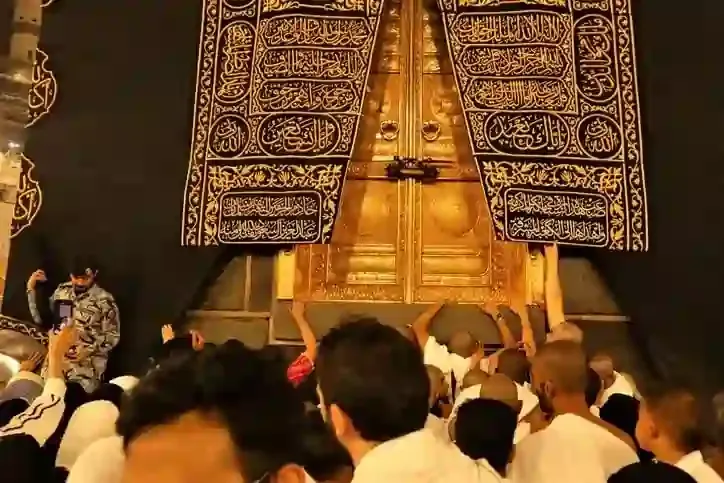
Inside the Architecture of Paradise: Prophet’s Mosque Friday Sermon 25 September 2026 (14 Rabi ul Akhir 1448 AH)
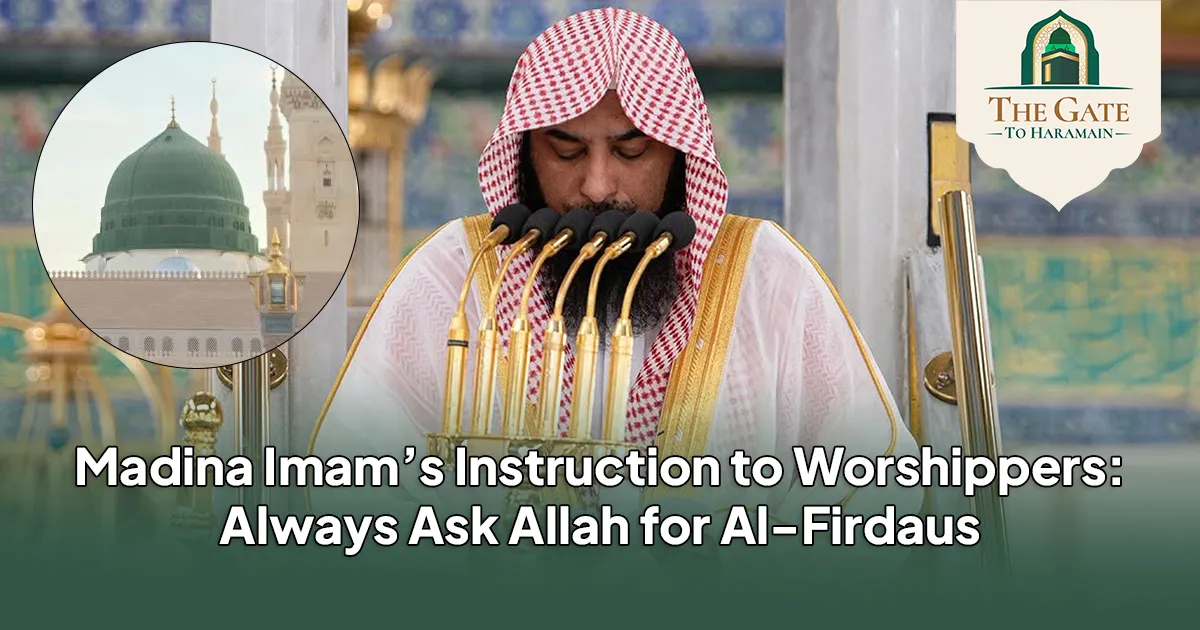
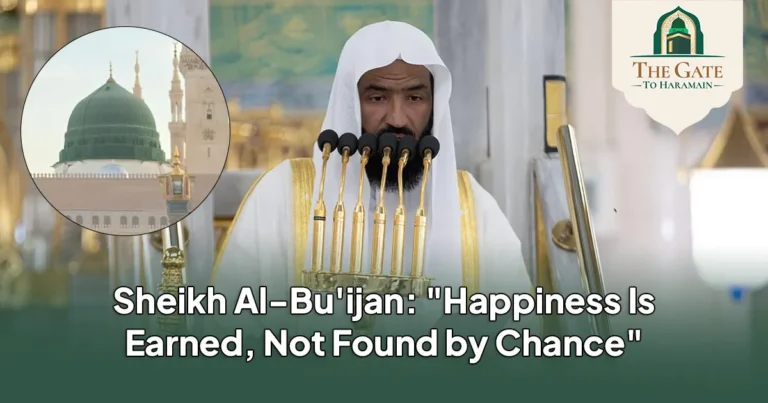
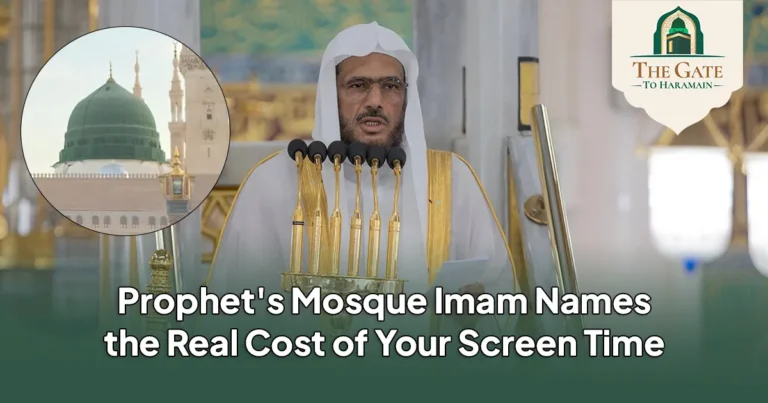
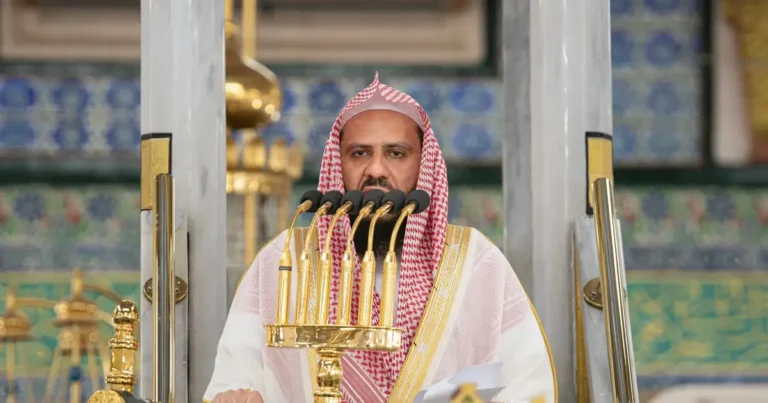
There’s a particular kind of silence that falls over Al-Masjid an-Nabawi when the khutbah turns to Jannah. You can hear it even through a recording. Sheikh Salah Al-Budair, Imam and Khateeb of the Prophet’s Mosque in Medina, spent this Friday building that silence brick by brick — describing gates, rivers, gold mortar, and a Face that no created thing can compare to
By the end, he’d made a case that most of us live our entire lives without seriously entertaining: that Paradise is not a vague reward tacked onto good behavior, but a real place, mapped out in astonishing detail, and that we are, every one of us, running out of time to earn it.
Here’s what he said — and why it’s worth sitting with.
The Abode of Peace
The sermon opened the way these sermons always do, with the Khutbat al-Hajah, praising Allah as Al-Ghafur Al-Wadud — the All-Forgiving, the Loving. Sheikh Al-Budair testified to the oneness of Allah and the messengership of Prophet Muhammad ﷺ, whose revelation, he said, tore through the darkness of ignorance across mountains and plains.
Then came the foundation everything else rests on: Taqwa. God-consciousness. And instead of the usual abstract framing, the Sheikh reached for a medical metaphor that lands harder than most sermons manage:
“Fear Allah with the mindfulness of one who treats sickness with acts of obedience, and guards themselves against prohibited acts.”
Think about that for a second. Not fear as anxiety — fear as the discipline of someone managing a real, diagnosed condition. You don’t casually ignore a doctor’s orders. That’s the posture.
From there, the Sheikh described Paradise itself: an exclusive sanctuary Allah created for His devoted allies (Awliya) and chosen servants (Asfiya), filled with His mercy, honor, and eternal pleasure. He called it Dar al-Salam — the Abode of Peace — a place where bliss never runs dry, blessings never decay, and goodness only ever multiplies.
To capture just how far beyond imagination this place is, he cited the Hadith Qudsi narrated by Abu Hurairah (may Allah be pleased with him), in which the Prophet ﷺ relayed Allah’s own words:
“I have prepared for My righteous servants what no eye has seen, no ear has heard, and no human heart has ever conceived.”
Sit with that phrase for a moment. Not “greater than you’d expect.” Not “beyond your wildest dreams.” No human heart has ever conceived it. The vocabulary for describing it doesn’t exist yet, because nothing in this world corresponds to it closely enough.
Built From Gold, Guarded by a Question
The physical description that follows is where the sermon stops being poetic and starts being architectural.
Paradise, according to the authentic scriptural descriptions the Sheikh cited, is built from alternating bricks of gold and silver, held together with mortar made of pure, fragrant musk (Al-Misk Al-Adhfar). The ground isn’t paved — it’s carpeted with pearls and jewels, and the soil itself is pure saffron.
And who gets there first? Prophet Muhammad ﷺ. He’ll be the very first person to knock on the gates of Paradise. When the gatekeeper asks, “Who are you?” and he answers, “Muhammad,” the reply comes back immediately: “I was commanded not to open for anyone before you.”
There are eight gates in total. To give a sense of scale, the Sheikh noted that the distance between the two doorposts of a single gate is comparable to the distance between Mecca and Hajar — or Mecca and Busra. We’re not talking about a door. We’re talking about a gap wide enough to swallow a journey of days.
What Happens to a Human Body in Paradise
This is the part of the sermon that tends to stop people mid-scroll, because it isn’t metaphorical. The Sheikh described an actual, physical transformation.
Radiant from the start. The first group to enter Paradise will have faces shining like the full moon on a clear night. The group right behind them will radiate like the brightest star in the sky.
No decay, no waste, no discomfort. Dwellers of Paradise won’t urinate, defecate, spit, or blow their noses. Their combs will be gold. Their sweat will smell of musk. Their incense burners will burn aromatic aloeswood. Every trace of the maintenance that a human body requires on Earth — all of it — is simply gone.
One heart, one form. All hostility and resentment will be stripped from their chests entirely; the sermon describes them existing “on the heart of a single man.” Physically, they’re recreated in the image of their father Adam — sixty cubits tall, seven cubits wide, permanently thirty-three years old, fair-skinned, curly-haired, with kohl-rimmed eyes, glorifying Allah morning and evening.
And then come the four guarantees, announced the moment they’re settled:
- “You will live and never die.”
- “You will remain healthy and never fall sick.”
- “You will remain young and never grow old.”
- “You will enjoy absolute bliss and never suffer misery.”
Read those again slowly. Every fear that shapes a human life — mortality, illness, aging, suffering — addressed and permanently closed off, one line at a time.
Rivers, Trees, and a Basin That Ends Thirst Forever
The Sheikh instructed the congregation directly: if you’re going to ask Allah for anything, ask for Al-Firdaus Al-A’la — the highest Firdaus. It sits at the absolute center and highest tier of Paradise, directly beneath the Throne of the Most Merciful, and it’s the source from which every river in Paradise gushes forth.
Among those rivers is Al-Kawthar — the greatest and sweetest of them all, given as a special honor to Prophet Muhammad ﷺ. Its banks are lined with hollow domes of pearl. Its soil is pure musk. Its bed is strewn with pearls. Its water is whiter than milk and sweeter than honey. The drinking vessels along its shore number the stars in the sky, and birds with necks as thick as camels gather there.
Then there’s Al-Hawdh — the Prophet’s Basin, located on the Day of Gathering. It spans a month’s journey in both length and width, fed by two spouts flowing directly from Paradise. Whoever drinks even a single sip will never thirst again. There’s a warning attached to it too: those who altered or innovated after the Prophet’s teachings will be turned away and driven off.
The sense of scale doesn’t let up. A single tree in Paradise casts a shade so wide that a rider could travel beneath it for a hundred years without ever crossing to the other side. Believers will live in pavilions carved from a single hollowed-out pearl, sixty miles tall.
And the celestial spouses — Al-Hur Al-‘Ein — are described with a kind of light that’s hard to picture: if one of them looked down at the earth, her radiance alone would illuminate everything between heaven and earth and fill the air with fragrance. Her headcover alone, the Sheikh said, is worth more than this entire world and everything in it. And there will be no single or unmarried person in Paradise — everyone is paired.
The Lowest Rank in Paradise Still Outdoes Every King on Earth
Here’s the detail that tends to reframe everything else in the sermon: even the least fortunate person in Jannah is living better than history’s greatest rulers.
| Lowest status in Paradise | Highest status in Paradise | |
|---|---|---|
| Who gets it | The last person admitted, after everyone else has taken their place | Those Allah specifically chose and honored |
| What they receive | The equivalent of an earthly king’s kingdom, multiplied five times — then another ten times on top of that | “I planted their honor with My own Hand and sealed it” |
| The ceiling | Whatever their soul desires and their eye delights in | Blessings unseen by any eye, unheard by any ear, unimaginable to any heart |
The exchange the Sheikh quoted is worth reading twice:
“It will be said to him: ‘Would it please you to have the kingdom of a king of the world?’ He says: ‘I am pleased, my Lord.’ Allah says: ‘You shall have that, and its like, and its like, and its like, and its like… and ten times as much!'”
That’s not a rounding error in generosity. That’s a deliberate statement about the scale of divine giving — the “worst deal” in Paradise is still incomprehensibly good.
Beyond All of That: Ridwan and the Vision of Allah
Every gate, every river, every pearl pavilion described so far — the Sheikh treated as prelude. Two things top the list, and neither of them is physical.
First, Ridwan — Allah’s pleasure. He’ll call out to the people of Paradise: “O people of Paradise!” And they’ll answer: “At Your service, our Lord!” He’ll ask if they’re satisfied. They’ll respond: “Why would we not be satisfied when You have given us what You have not given to any other creation?” And then comes the line that the Sheikh clearly wanted to land:
“I bestow upon you My pleasure, and I shall never be angry with you ever again.”
Second, and higher still — seeing His Face. Citing the hadith of Jarir ibn Abdullah (may Allah be pleased with him), the Sheikh described the Prophet ﷺ coming out to the companions on the night of the full moon and saying: “You will see your Lord on the Day of Resurrection as you see this, and you will not be harmed in seeing Him.”
When the divine caller announces that Allah is about to fulfill His final promise, the believers will ask: “Has He not made our scales heavy, brightened our faces, admitted us to Paradise, and saved us from the Fire?” And then the Veil is lifted. The Sheikh was direct about what this means: no gift given to the believers in Paradise — not the rivers, not the palaces, not the pearls — will be more beloved to them than beholding the Noble Face of their Lord.
He urged the congregation plainly: don’t neglect this. Seize it. Work for it.
The Second Sermon: You’re Running Out of Time
If the first sermon was expansive, the second one turns sharp. The tone shifts from describing Paradise to warning against being deceived by this world.
The reality, the Sheikh said, is that worldly life is folding away fast, and death is tied to every person’s forelock. He reached for old proverbial wisdom to make the point stick:
“Many a wound has killed, and many a stumble has destroyed.”
“He who fears sets out early at night, and he who sets out early reaches the destination.”
“Indeed, Allah’s merchandise is valuable; indeed, Allah’s merchandise is Paradise!”
That last line does a lot of work. It reframes faith not as a background hobby but as a transaction with real stakes — and like any valuable merchandise, procrastination is how you lose it.
Gratitude, Protection, and a Prayer for Rain
The sermon then turned outward. The Sheikh called on the congregation to be grateful for the security, faith, and unity found in Saudi Arabia, highlighting its honor in serving the Two Holy Mosques — Al-Masjid al-Haram and Al-Masjid an-Nabawi — as the birthplace of revelation, the site of the Prophet’s ﷺ migration, and a beacon of knowledge and service to pilgrims from around the world.
The closing supplications covered a lot of ground:
- Blessings on Prophet Muhammad ﷺ and the Four Rightly Guided Caliphs — Abu Bakr, Umar, Uthman, and Ali.
- Prayers for the honor of Islam, the protection of Saudi Arabia and all Muslim nations, and guidance for the Custodian of the Two Holy Mosques and the Crown Prince.
- Protection, victory, and healing for the soldiers stationed on the frontlines, and a prayer for Al-Aqsa Mosque to be purified from those who aggress against it.
- And finally, an Istisqa — a prayer for rain — repeated three times with real urgency: “O Allah, send upon us rain! O Allah, send upon us rain! O Allah, send upon us rain, and do not make us among the despairing!” (اللهم أغثنا)
Following the khutbah, the Imam led the congregational Friday prayer, reciting Surah Al-Kawthar in the first rak’ah and Surah Al-Ikhlas in the second — a quiet, fitting echo of a sermon that had just spent an hour describing the river of Kawthar and the oneness of the One who created it.
Five Things Worth Carrying With You From This Sermon
1. The “lowest” rank in Paradise is still unimaginable luxury. It’s tempting to assume the bottom tier of Jannah is modest. It isn’t. The person with the least status still receives an estate worth fifty times the kingdom of an earthly king — plus anything else their heart desires. Divine generosity doesn’t have a bad tier.
2. Your body gets fully rebuilt — not patched, rebuilt. No waste, no decay, no aging past thirty-three. Sixty cubits tall, in the image of Adam. This isn’t an improved version of a human life. It’s a different category of existence.
3. Ridwan outranks every physical reward on the list. Gold bricks, pearl pavilions, rivers of honey — all of it takes a back seat to one sentence from Allah: “I will never be angry with you ever again.” That’s the real headline of the sermon, buried a little deeper than the architecture.
4. Seeing His Face is described as the actual peak. Not a bonus. Not a nice extra on top of the rivers and gardens. The Sheikh was explicit: nothing given to believers in Paradise will be more beloved to them than this moment.
5. This is framed as urgent, not aspirational. The sermon doesn’t let the beauty of Paradise sit as a pleasant thought experiment. It’s paired, deliberately, with a warning: death is tied to your forelock, the world is folding away behind you, and Allah’s merchandise — Paradise itself — is expensive. Wanting it isn’t the same as earning it.