

Why Collecting Grain for Birds at the Haram Won’t Cure Infertility, and What It Could Cost You
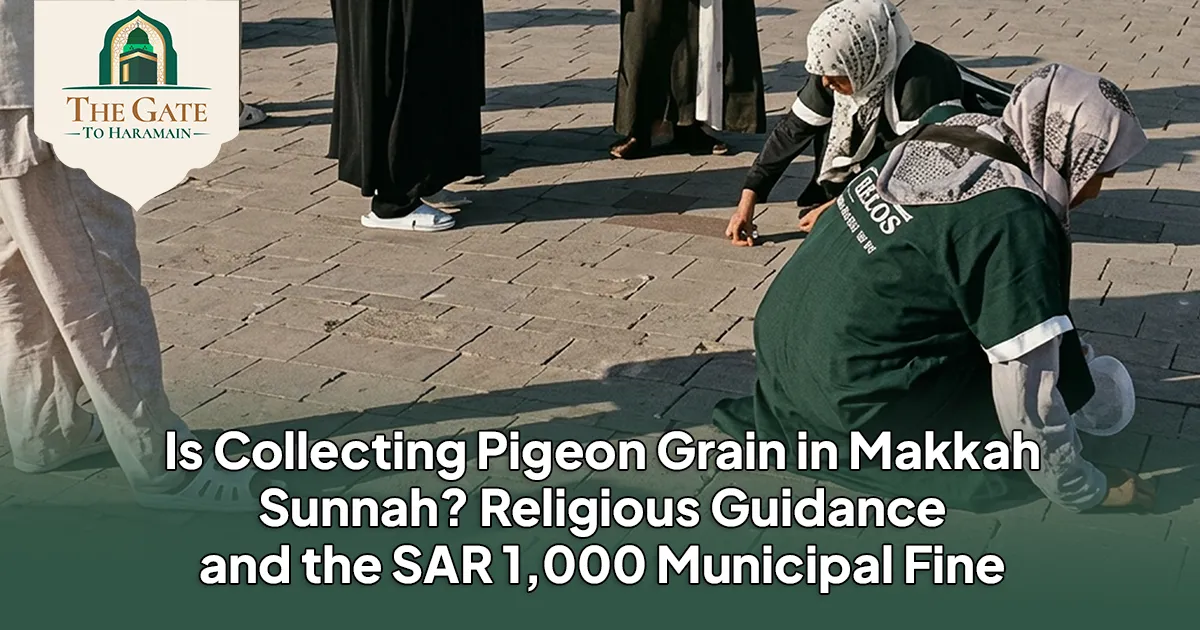
A viral video shows pilgrims in Makkah and Madinah gathering grain scattered for pigeons, believing it helps couples struggling to conceive. Here’s what the practice is, what the Saudi rules say, and what Islam and medicine actually teach.
On 19 November 2026, a video began circulating in messaging groups and on social media. It showed people in Makkah and Madinah bending down to collect grain that had been scattered for birds. Some were reportedly taking it home as a remedy for childlessness.
Two separate problems sit inside that short clip. The first is a belief with no footing in Islam or medicine. The second is a practical one: scattering food for pigeons in the holy cities is a municipal violation, and it can cost up to SAR 1,000.
The report came from Zamin.uz, a regional outlet, which described pilgrims including visitors from Uzbekistan who were performing Umrah. Saudi authorities have not, as far as we can find, commented on the infertility claim itself. That silence matters, and we’ll come back to it.
What the belief gets wrong about Islam
The sanctity of Makkah and Madinah comes from the worship performed there. Prayer in the Haram, tawaf around the Ka’bah, supplication, and remembrance of Allah are the acts that carry the reward. Scholars have long emphasized this. The virtue belongs to the worship, not to the courtyard floor.
Nothing picked up from the ground inherits that virtue. Not grain, not seeds, not pebbles. We searched for any Qur’anic verse, authentic hadith, or recognized ruling that treats scattered bird food as a source of healing or barakah, and we found none. That is a narrower claim than “it’s forbidden,” and we’re careful to make only the narrow one. If you want a formal ruling, put the question to a qualified scholar.
Wanting children is not a shameful desire, and Islam does not ask anyone to hide it. The Qur’an records Prophet Zakariyya asking Allah for an heir, and supplication for offspring is a well-established part of the tradition. Pilgrims who ask Allah for children in the Haram are following something real.
Du’a and treatment are partners, not rivals
This is where the belief does its real damage. It doesn’t usually cause dramatic harm. It causes delay.
A couple who spends two years hoping a handful of grain will work has spent two years without a diagnosis. Infertility is a medical condition, and it can involve either partner. Clinicians often need to assess both spouses, and many causes are treatable once they are identified. Hope placed in a folk remedy can push that assessment back by years, sometimes until the window for certain treatments has narrowed.
Infertility also isn’t a verdict on anyone’s faith. Treating it as a spiritual failing adds shame on top of the difficulty, and shame tends to keep people from seeing a doctor at all.
So the sensible approach combines the two. Ask Allah sincerely. Then go to a qualified doctor and get a real answer.
The rule about feeding pigeons
The Municipality of the Holy Capital has publicly stated that scattering food for pigeons and other animals is a violation. The fine is up to SAR 1,000, and the stated reasons are public hygiene and the cleanliness of the holy sites. Sabq carried statements from the municipality’s spokesperson, which reportedly note that repeat offences can double the penalty.
Enforcement doesn’t always look consistent on the ground. Okaz reported that a sign warning against feeding birds near the Grand Mosque had disappeared and that the absence sparked public discussion. A missing sign does not cancel the rule. Treat the bylaw as in force, because it is, and don’t gamble SAR 1,000 on a notice board.
It’s worth separating two things here. The pigeons of the Haram have been part of the sanctuary’s life for a long time, and they aren’t the problem. The problem is the food: grain scattered on walkways and food waste left on the marble.
Why the authorities push back
Scattered food brings practical problems that have nothing to do with theology. It draws rodents and insects into spaces where people pray. It makes wet marble slippery, which is a serious risk for elderly pilgrims and small children. It gathers birds into the paths of very large crowds, which slows movement at busy times. And hand-feeding changes birds’ foraging habits, so they come to depend on handouts.
Keeping the courtyards clean is also an act of consideration for the people sharing them. Seen that way, the rule protects other worshippers as much as it protects the birds.
What this means for you
If you’re preparing for Umrah or Hajj, here is what to keep in mind:
- Don’t collect grain, seeds, or “blessed” objects from the ground expecting healing. This is not a Sunnah, and it won’t help.
- Don’t scatter food for pigeons. A fine of up to SAR 1,000 is a poor trade for a handful of grain.
- Decline politely if someone offers you something for fertility. Well-meant advice can still be wrong, and you can thank someone without accepting their remedy.
- Arrange a medical assessment for both spouses. That is usually where a real answer starts.
- Put your effort into what has a basis. Sincere du’a, dhikr, charity, and patience are the acts Islam actually recommends.
- If this video is going around your family group, correct it kindly. Most people who share it are worried about someone they love. Gentle correction works better than mockery, and it’s more likely to help.
What we have not confirmed
We want to be direct about the limits of this reporting.
- No Saudi authority has commented specifically on the belief that bird grain cures infertility. The original report comes from one regional outlet.
- The fine applies to scattering food for pigeons and animals. We have not found a confirmed report of anyone being fined simply for collecting grain, though inspectors may act if gathering obstructs walkways.
- The claim that the fine doubles for repeat offenses comes from the municipality’s spokesperson as reported by Sabq. Check current municipal guidance before relying on it.
- Okaz’s report about the missing sign doesn’t tell us whether the removal was temporary.
If any of these details matter for a decision you’re making, confirm them with the municipality or with your travel provider.
Closing thought
The Haram offers something no grain can: the chance to stand before Allah, ask Him directly, and leave the matter in His hands while doing your part. Keep your worship anchored in what is established, respect the rules that keep the holy cities clean, and see a doctor if you are struggling to conceive. That is the path that actually leads somewhere.
Frequently asked questions
Can I take anything home from the Haram for blessings?
Zamzam water is the item most pilgrims bring home, and it carries established significance. Picking up grain, stones, or soil from the courtyards for healing has no basis in the Sunnah.
Will I be fined for picking up grain or only for scattering it?
The reported fine targets scattering food. We have no confirmed reports of fines for picking up grain alone.
Can I chase away pigeons if they bother me?
Harming or frightening birds in the sanctuary goes against the spirit of the Haram’s sanctity. Leave them alone, and don’t feed them either.
What is the recommended Islamic approach to infertility?
Combine sincere dua with proper medical care from qualified doctors. Charity and patience are recommended throughout.