Don’t Gamble With Your Faith: Masjid Al Haram Friday Sermon 27 Nov 2026 (17 Jumada al-Akhirah 1448 AH)
We lock our doors at night. We read the expiry date on the milk. We cross the road at the lights. Yet many of us will risk our prayers, our friendships, and our honesty without a second thought.
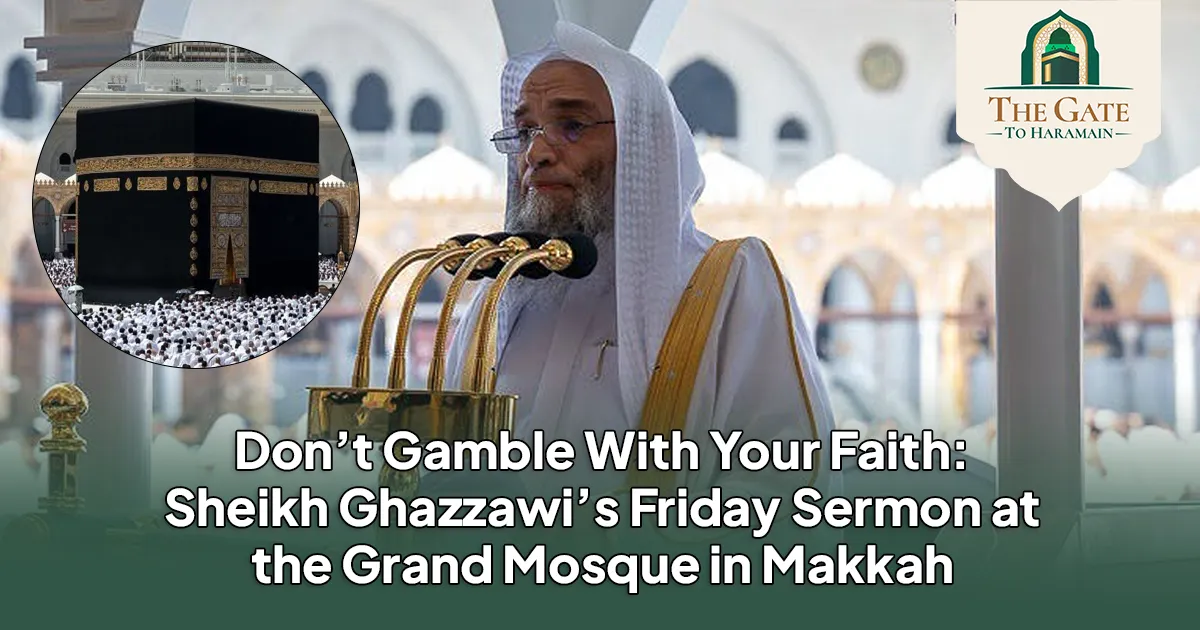
That contradiction was the heart of this Friday’s sermon at the Grand Mosque in Makkah. Sheikh Dr. Faisal bin Jamil Ghazzawi, Imam and preacher of the Haram, began by urging worshippers to fear Allah, repent to Him, be sincere to Him, and worship Him well. Then he asked a harder question: why are we so careful with our bodies and so careless with our souls?
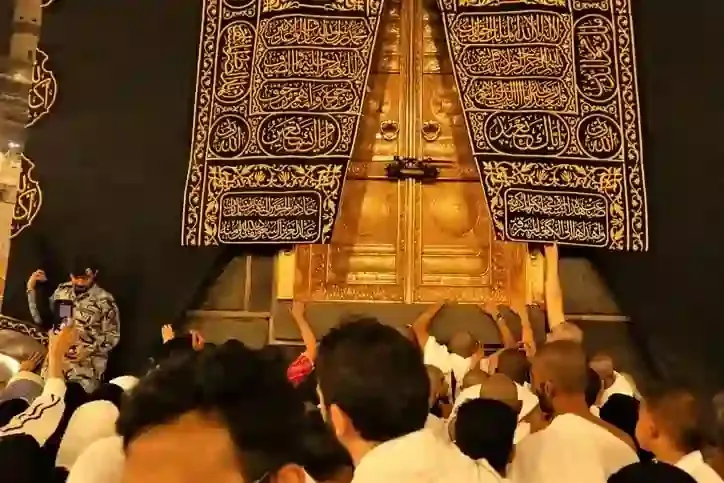
Before the khutbah began, the gathering around the Kaaba had been absorbed in du’a, asking for forgiveness, for Paradise without reckoning, for righteous families, and for the special hour of Friday when prayers are answered.
We guard the body and gamble with the soul
Sheikh Ghazzawi started with human nature. People instinctively take precautions, avoid danger, and stay away from harm because they want safety and peace. A person who walks into peril without thinking about the consequences, he said, lacks wisdom.
He pointed to the Quranic command: “And do not throw [yourselves] with your [own] hands into destruction.” (Surah Al-Baqarah, 2:195)
He also quoted one of the early scholars of the Salaf: “A human being has nothing dearer to him than himself, yet I marvel at someone who gambles with it and exposes it to destruction; the reason for this is deficiency of intellect and poor judgment.”
The Arabic word he used for this kind of recklessness is mukhatarah. And it does not stop at physical danger. It seeps into almost every part of life.
Ten ways people gamble with their faith and their lives
The Sheikh spent most of the first khutbah on ten paths of recklessness. Some are obvious. A few are the sort we tend to wave away.
- Faith, prayer and the mind. A believer does not risk his tawheed, his prayer, or his intellect. The Sheikh recalled the Prophetic counsel not to associate anything with Allah even if cut to pieces or burned, not to abandon an obligatory prayer on purpose, and not to drink alcohol, “for it is the key to all evil.”
- Taking life, including your own. Allah says: “And do not kill yourselves. Indeed, Allah is to you ever Merciful.” (Surah An-Nisa, 4:29) The Sheikh described killing an innocent soul as the gravest sin after shirk and recalled the severe warning of Surah An-Nisa (4:93) for anyone who kills a believer intentionally.
- Transgression and oppression. Injustice comes back to the one who commits it. “O mankind, your injustice is only against yourselves.” (Surah Yunus, 10:23) He added that the Prophet ﷺ said no sin deserves a faster punishment in this world, on top of what awaits in the Hereafter, than transgression and cutting family ties. His Arabic maxims: “Transgression fells its people,” and “Whoever unsheathes the sword of transgression will be slain by it.”
- Violating the sanctity of the Haram. Harming the safety or rights of pilgrims and visitors in Makkah is a serious form of transgression. Allah says: “And whoever intends [a deed] therein of deviation [in religion] by wrongdoing—we will make him taste of a painful punishment.” (Surah Al-Hajj, 22:25) The Prophet ﷺ also named a deviator within the Sanctuary among the three people most hated by Allah.
- Exposing the mind to doubts. Deviant ideas, manipulative preachers, and dubious media all unsettle faith. The Sheikh also warned against taking fatwas from people who are neither qualified nor trustworthy, but instead from established scholars.
- Giving in to desires in secret. Browsing harmful websites, watching indecent content, or listening to corrupting material happens when we forget that Allah sees us. He cited: “They conceal [their evil actions] from the people, but they cannot conceal them from Allah.” (Surah An-Nisa, 4:108)
- Carrying on in sin without repentance. The Prophet ﷺ described how every sin leaves a black spot on the heart. Repent, and the heart is polished. Persist, and the stain spreads until it covers the whole heart. The Sheikh tied this to Surah Al-Mutaffifin, where Allah speaks of the stain on hearts from what they used to earn. He then shared the advice of Zuhayr ibn Nu’aym to a man who asked for counsel: “Beware of Allah taking you while you are heedless.”
- Bad company. “A person is upon the religion of his close friend, so let each of you look at whom he befriends.” Befriending someone whose religion and character are not approved puts your own faith at risk, because a companion’s influence is great.
- Selling your values for quick gain. Lying, cheating, and false oaths to get ahead end badly. The Prophet ﷺ warned that whoever swears a false oath to take a Muslim’s wealth will meet Allah while He is angry with him. And ambition does its own damage: “Two hungry wolves sent into a flock of sheep are not more destructive to them than a man’s craving for wealth and prestige is to his religion.”
- Careless debt. This one landed hardest, because it is so normal. The Prophet ﷺ said: “Do not frighten yourselves after your state of security.” The Companions asked what that meant. He answered: “Debt!” The Sheikh warned that borrowing without real need or without a sincere intention to repay is a hazard people brush aside and recalled that the soul of the believer is held back by his debt until it is settled.
Why do sensible people still fall for it?
Sheikh Ghazzawi traced all ten back to two roots. The first is a shortage of insight and knowledge. The second is weak resolve and willpower.
When those two give way, a person stops seeing where a choice leads and follows appetite instead. Hence the verse he cited: “And do not follow desire, for it will mislead you from the way of Allah.” (Surah Sad, 38:26)
The second khutbah: when is risk acceptable?
In the second sermon, the Sheikh set out a limit. Risking your life is only commendable for a valid religious purpose or a recognized need, and even then the consequences can be heavy. Outside of that, it is recklessness.
He then described righteousness through five contrasts:
- Consultation or stubbornness. Seeking advice is the essence of guidance. Whoever clings to his own opinion alone gambles and strays.
- Mindfulness or secret sin. Awareness of Allah is true awe. Whoever disobeys Him in private gambles with punishment.
- Accepting the truth or arrogance. Yielding to the truth is the essence of insight. Whoever follows desire and rejects sincere advice gambles with his guidance.
- Guarding the tongue or reckless speech. The tongue is a source of ruin, and those who give it free rein fall into the traps of Satan.
- Truthfulness or habitual lying. Lying is the core of wickedness. A habitual liar gambles with consequences that shatter his dignity and cloud his spiritual vision.
The one thing you cannot replace
His closing line is the one worth carrying out of the mosque. A person may risk many things in this world, he said, but the greatest calamity is to risk his religion. It accepts no risk under any circumstances, because it is the most precious thing he owns and his capital.
Money can be earned again. A job can be replaced. Faith, he reminded the congregation, cannot be wagered and then won back. The wise believer does not waste the energy of youth and health on vanity or trade Paradise for worldly trinkets.
Du’a and the Friday prayer
After the sermon, Sheikh Ghazzawi prayed for peace and stability across the Muslim world, for the security of Saudi Arabia, for the guidance of leaders, and for the relief of the oppressed, praying specifically for the people of Palestine. He also asked for protection for the borders and those who defend them.
In the Friday prayer that followed, he recited Surah Ash-Sharh in the first rak’ah, on relief and turning to Allah, and Surah At-Takathur in the second, on the obsession with piling up more until the grave, and the certain reckoning to come.
Three things to take away
- Look at your circle. If a companion’s influence is as strong as the Prophet ﷺ described, who you sit with is a decision about your faith.
- Ask before you decide. Consultation is guidance. Stubbornness is a gamble.
- Think twice before you borrow. The sermon treated casual debt as a real threat to your peace in this life and after it.
Read more Friday sermon summaries from the Grand Mosque in Makkah and the Prophet’s Mosque in Madinah on The Gate to Haramain.