Gratitude to Allah: Four Daily Habits – Masjid An Nabawi Friday Sermon 27 Nov 2026 (17 Jumada al-Akhirah 1448 AH)
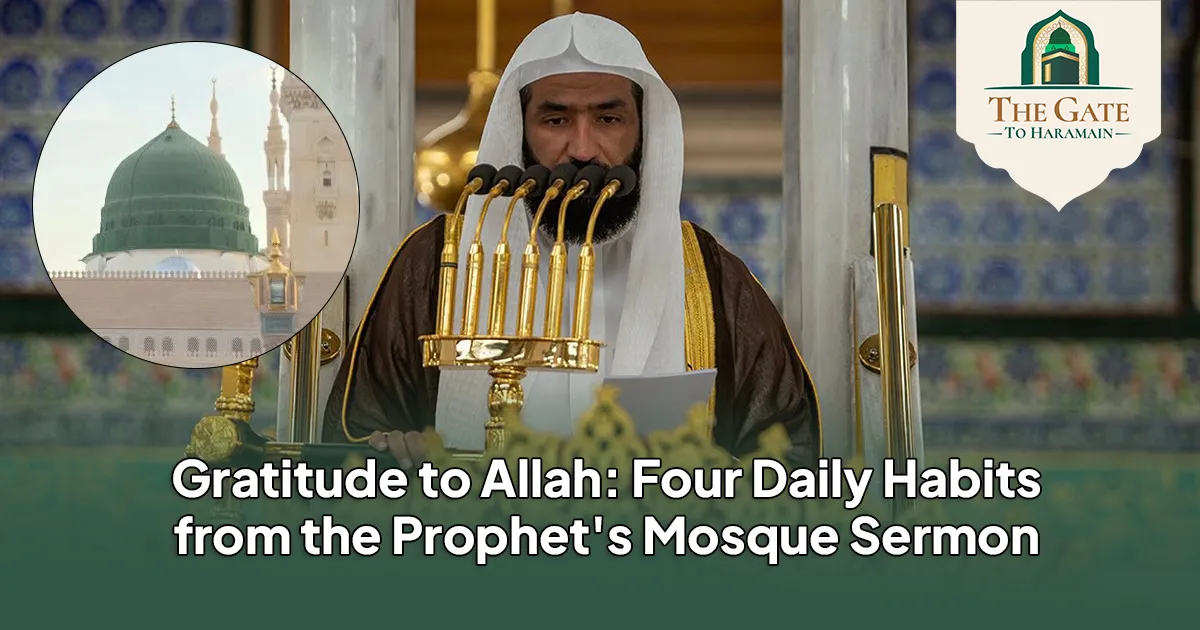
Most of us can name a blessing we lost last year. Far fewer can name the ones we woke up with this morning. In the Friday sermon at Masjid an-Nabawi on 27 November 2026 (17 Jumada al-Thani 1448 AH), Sheikh Dr. Abdullah Al-Buaijan pointed to that gap between what we notice and what we take for granted. Gratitude, he said, is not a polite phrase said at the end of a meal. It is a way of seeing, speaking, and acting.
What the Sermon Means by Gratitude
The sheikh defined gratitude to God as three things working together. The heart recognizes that a blessing comes from God, not only from one’s own effort. The tongue keeps up steady praise. The limbs put the blessing to use in obedience and in ways that please Him, without showing off. A warm feeling on its own falls short of that definition.
He also drew on an old saying that gratitude ties down the blessings you already have and draws in the ones you do not yet have.
Why We Value Blessings Only After They Are Gone
People get used to comfort. Many of us enjoy good health, a safe home, and steady food without giving them a second thought. We understand their worth only when they are taken away. The sermon contrasted this with the discerning believer, who takes stock while the blessing is still in his hands.
To make the point, the sheikh cited a hadith recorded by at-Tirmidhi. The Prophet Muhammad (peace be upon him) said that whoever wakes up secure in his home, healthy in his body, and with food for the day, it is as if the whole world has been given to him.
Four Daily Habits That Protect Your Blessings
The sermon moved from belief to practice, and it named four habits.
First, practice contentment with what God has apportioned. Gratitude and constant comparison do not sit well together. Accept what you have been given, and stop treating every gap as a grievance.
Second, look down, not up, in worldly matters. This was the most practical advice of the sermon. Compare yourself with people who have less money, less health or less security, not with those who have more. The Prophet (peace be upon him) told believers to look at those below them and not at those above, because that makes it less likely they will belittle God’s favor upon them.
Third, use what you have without waste. Avoid extravagance, and avoid stinginess too. A blessing left unused out of disdain is still a blessing that has not been honored.
Fourth, thank people, and pray for them. The sheikh made this part of thanking God. He cited the Prophet’s words that whoever does not thank people has not thanked God. Where you cannot repay a kindness, pray for the person who showed it until you feel you have repaid them.
Why Gratitude Never Feels Finished
The most striking point came near the end. The ability to thank God is itself a blessing, and it needs its own thanks. The sermon recalled the prayer of Prophet Sulaiman (peace be upon him), who asked God to inspire him to be grateful for the favor he had received, not merely to give him more. Sulaiman’s request ties gratitude to righteous action, and it reminds the listener that God describes the grateful as few among His servants.
This is why the sheikh described gratitude as an endless gate. The more a person knows their Lord, the more they see how much they owe Him, and the more they feel the need to say thank you again.
How to Start This Week
The sermon did not give a checklist, but its four habits translate easily into a simple routine. Each night, name three blessings you would miss if they disappeared. Pause before a meal and mention God’s provision before you eat. Once a week, thank someone who helped you and pray for them by name.
If this sermon has prompted you to plan Umrah, our site has planning guides to help you prepare before you travel.